Showing posts sorted by relevance for query girls. Sort by date Show all posts

Goddess Chasca


    Chasca is the goddess of light in Peruvian mythology. 

    Chasca was revered by the Peruvian Inca as the morning and setting sun. 


    She protects virgins and young girls as the goddess of dawn and twilight. 

    She is regarded as the sun's servant, and it is via her light that flowers and plants may grow and flourish.


    Latest Release - The Hindu Pantheon Series by Kiran Atma

    Chasca, The Long-Haired Star.


    Chasca or Ch'aska, also known as "The Long-Haired Star," was a goddess of Venus and the planets of the dawn and dusk. 


    She is the young girls' and virgins' protector. 

    She is connected to rebirth and spring. 

    Chasca is a central figure in the Incan pantheon. 

    The Incans present her with floral offerings. 

    The planet Venus is ascribed to her. 

    The emblems for Goddess Chasca are the Sun, the Fire, and the Flora. 


    She is in charge of the early morning and late afternoon hours of the day. 

    The motifs of Chasca include the sun, fire, love, and divination. 

    The sun, fire, and flowers are some of her emblems. 

    The dawn and twilight, the most serene features of Nature, were created by this Goddess, according to Incan mythology. 


    The Incan goddess of dawn.


    The Incas revered Chasca as a lovely goddess who was connected to dawn and dusk. 


    She is symbolized by flowers, fire, and the sun. 

    Because of their strong collaboration with Inti, the sun deity, Chasca or Ch'aska is also connected to love. 

    Together, they made it possible for Chasca to extract sprouts from the ground and aid in the growth and blooming of flowers. 

    The Incas of antiquity thought she would speak to them via the weather, particularly the clouds. 


    Chasca was said to aid in regeneration and change. 


    The Incans would honor the beauty that Inti and Chasca had produced at the Peruvian Incan Festival of the Sun. 


    They would rejoice in the sun's radiance and the flowering of plants and flowers. 

    Giving gifts to the goddess Chasca and dancing the night away in front of a fire pit were both customary during the celebration. 

    In order to banish ill luck and bring about change for the future, it was also believed that the people would burn old objects in the fire, such as clothes. 


    Goddess Chasca Invocation.


    The goddess Chasca was invoked by the Incans to help transform negative energy into good energy. 


    Just glance to the heavens to invoke Chasca. 

    Look up at the sky and ask her a question. 

    You could come upon the precise solution you need! Goddess of the dawn and twilight, she is shown as a lovely young woman with waves in her hair. 


    Chasca is the Sun God Inti's servant and is connected to Venus. 


    She guards the young maidens as well. 

    She is, in other words, Venus. 


    In addition, she is a pretty young woman and the guardian of virgins, much like the Roman Venus. 

    We speculate that she prefers an especially vivid hue of pink as Chasca was revered as the goddess of dawn and twilight by the Inca people of Peru. 


    She was revered as the serene facets of the sun at dawn and dusk. 


    She is referred to as the lovely girl with waves, and as the sun's servant, it is because of her light that flowers and vegetation may develop and flourish. 


    She was credited for controlling the weather and guarding virgins and young girls in "incan" mythology. 

    Her other name, "the long-haired star (venus)," refers to the connection between "chasca" and the planet "venus". 

    According to folklore, she interacts with her people via the clouds and, as the mistress of the dawn, the dew she throws onto the earth. 

    She was the creator of the flowers, using her light to inspire blossoming and pull sprouts from the ground. 

    She has no totem animals; instead, she is married to the sun deity "Inti."


    ~Kiran Atma


    References And Further Reading


    • Littleton, C.S. ed., 2005. Gods, goddesses, and mythology (Vol. 1). Marshall Cavendish.
    • Farrar, J. and Farrar, S., 2012. The witches' goddess. David & Charles.
    • Lurker, M., 2015. A Dictionary of Gods and Goddesses, Devils and Demons. Routledge.
    • Auset, P.B., 2009. The goddess guide: Exploring the attributes and correspondences of the divine feminine. Llewellyn Worldwide.
    • Reddy, F., 2012. Morning Stars, Evening Stars: Venus and Mercury. In Celestial Delights (pp. 51-93). Springer, New York, NY.
    • Deeds, E., 2008. DE LAS COSTUMBRES ANTIGUAS DE LOS NATURALES DEL PIRU. Guide to Documentary Sources for Andean Studies, 1530-1900, 2, p.170.
    • Franklin, A., 2002. Midsummer: Magical Celebrations of the Summer Solstice (Vol. 7). Llewellyn Worldwide.
    • McElroy, D.R., 2020. Superstitions: A Handbook of Folklore, Myths, and Legends from Around the World. Wellfleet Press.
    • Hall, L.B., 2021. Chapter Six The Andean Virgin. In Mary, Mother and Warrior (pp. 137-168). University of Texas Press.
    • Siemens, W.L., 1975. Heilsgeschichte and the Structure of Tres tristes tigres. Kentucky Romance Quarterly, 22(1), pp.77-90.
    • Stahl, F.A., 1920. In the Land of the Incas. Pacific Press Publishing Association.
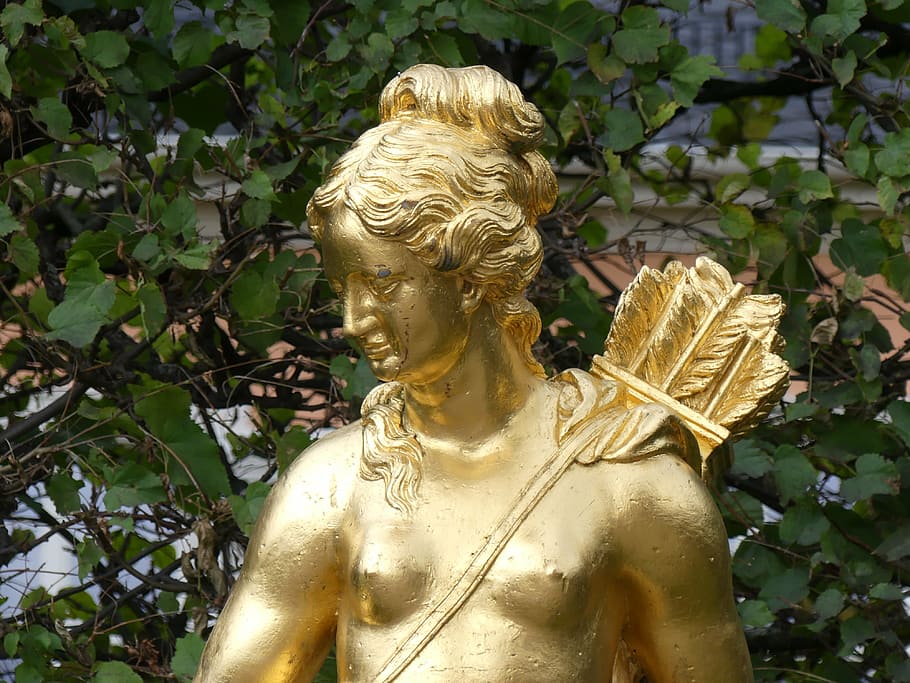


    Goddess Artemis


    Royalty-free Artemis photos free download | Pxfuel


    Artemis is the Greek goddess of hunting. 


    • Artemis, the Olympian goddess of the wilderness and ruler of woods, woodlands, and wild animals, was created by Zeus. 
    • Artemis, often known as the goddess of childbirth, is the guardian of young girls until they reach marriageable age. 
    • She is the embodiment of independence and self-reliance, as well as the protector of the vulnerable and mistreated, as the Virgin Huntress. 
    • Artemis is typically portrayed as a young lady with a bow and arrow in her hands. Her holy animals include deer, bears, and cypress trees.

    Queen Of Heaven - Goddess In The Stars


    The many stars in the night sky, which were so apparent to our forefathers before the development of artificial lighting, were sometimes referred to as spirits or minor divinities. 

    When they were female, they were commonly shown as lively young ladies (Slavic Zorya), and were frequently the children of the sun and/or moon goddess (Baltic Ausrin and Valkyrin). 

    Occasionally, a temptress occurs, such as African Morongo (see Massasi), who lusted for her son and, after her husband raped her, planned for his murder as a punishment. 

    A star goddess may appear as an elderly lady, as in the case of South American Ceiuci, or as a young woman, as in the case of Tibetan Goddess. 


    Traditionally, a few stars and star groupings have been noted for their prominence in the sky at various times. 

    In Egypt, the rise of the star Sirius in the springtime corresponded with the Niger River's land-renewing floods. The star was related with rebi and was the chariot of the goddess Sothis. 

    The morning and evening star, which we name Venus after a Roman goddess who was not originally related with the planet, occurs in numerous mythology (Eastern Mediterranean Ishtar and Astarte, North American Gendenwitha); she was usually connected with relationships and love. 

    The sexual relationship might be catastrophic at times, as with the Baltic Saul's Meita, the cherished sun daughter raped by her moon dad. 

    Occasionally, a star goddess is linked to a human enterprise other than lovemaking, such as when Celtic Sirona controlled the healing arts. 

    Many civilizations saw the Pleiades as a group of sisters or playmates (North American Chehiayam and Kusi'tawa'qari, for example). There are a variety of stories for how a group of girls became stars, including being punished for doing something banned (typically little, such as whistling) or developing from a mutual attraction for males who dwell in the area. 

    Violence or incest is occasionally invoked, as it was with Australian Abobi. Their father, a rapist, chased that goddess's daughters until she transformed them into s Some constellations, such as Andromeda, Cassiopeia, and Cyno, are named after Greek gods and heroines. 

    Finally, the goddess Tou-Mou emerged as the pole star or North Star in China.


    ~Kiran Atma

    You may also want to read more about Goddess Symbolism here.


    Goddess Juno


    Juno is the Roman goddess's mother.

    Juno, the Roman equivalent of Hera in Greek mythology, is Rome's protector and queen of the gods.

    She is the queen of all types of femininity, protecting and leading young girls into maturity.

    Juno, the patroness of marriage, bestows upon her devotees the ideal mate at the ideal time.

    The peacock is her sacred animal, and the month of June is named after her.


    ~Kiran Atma


    Goddess Flora


    The Roman goddess of spring.

    Flora, the goddess of flowers and springtime, is honored with dancing, singing, and drinking throughout April and early May.

    She is the ruler of blooming plants and fruits, as well as the protector of vegetation against illness and decay.

    She is Ceres' handmaiden and is in charge of the blooming of vegetation and the maturation of girls into women.


    ~Kiran Atma


    Goddess Ngame


    Ngame: Goddess of the Soul from West Africa.

    Ngame is regarded as a moon goddess by the Akan people of Ghana, who believe she created the heavenly planets.

    She imbued individuals with souls by firing moon rays into them with a bow and arrow at birth.

    Girls who were supposed to be endowed with Ngame's supernatural abilities were nurtured as royalty and rose to become their people's reigning queens and priestesses.


    ~Kiran Atma