The spirit and inspiration of the Divine Female permeate the whole fabric of Italy, whether it is in a quiet city square or a bustling museum. Her obelisks in Rome's Saint Peter's Square at the Vatican symbolize the site of historic lyceums, or institutions for studying Goddess mysteries. Her statues are still present at Malta's megalithic temple complexes, which are located just south of Sicily.
You may discover sculptures, objects, and fabrics showing her from Paleolithic to modern times by entering the Louvre in Paris or museums in Turin, London, Naples, or Ankara. Amazing cave paintings from Lascaux, France, from 15,000 BCE depict her. She may also be seen in palm-sized items that are touching, like the Venus of Willendorf (25,000 BCE), which was discovered in Austria.
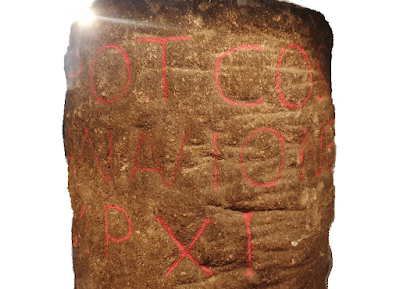
In Ostia Antica, there is a temple or sacellum called Bellona that is devoted to the Italic goddess Bellona, who may have been combined with Magna Mater.
The deep beauty and spirit of the Goddess continue to inspire and be suggested by tapestries like La Dame a la Licorne, The Lady and the Unicorn, which is housed at the Cluny Museum in France. The adventurous pilgrim traveling to holy places throughout Europe will encounter all of this.
Goddess Worship In Pompeii.
The partly discovered city of Pompeii, which was left behind when Mount Vesuvius erupted in 79 CE, offers a rare window into a history that has been frozen in time. Travelers may still read graffiti and ads on walls and floors in Pompeii, as well as enjoy mosaic tile flooring and look out for carriage wheel ruts on the stone pavement.
One might imagine hearing and smelling the activity of long ago. In addition to stadiums, brothels, temples, and private residences, there are villas to discover. Even some of the impoverished people's bodies who perished in the volcanic explosion have been preserved for interested people to see. One of the most well-preserved buildings in this enormous metropolis is the Temple of Isis, which stands out as the ideal illustration of Isis worship as it developed outside of Egypt and into the Greco-Roman world.
All around the Mediterranean area and Asia Minor, immigrants, sailors, warriors, merchants, and her priesthood of men and women sung Isis' praises. She mixed with the native deities in various other nations. In reality, the worship of Isis was once fiercely competitive with that of other mystery religions, including the cult of Mithras and young Christianity, due to her popularity across the known globe.
If Western civilization might have evolved on a matriarchal foundation, Isis "may have been too tenacious a mistress to dethrone," claims R. E. Witt in Isis in the Ancient World. Some elements of Isis worship did alter as it spread outside of Egypt.
Instead of the exotic and green-hued Osiris, Isis was now married to the Ptolemaic hybrid deity Serapis. Serapis was an Egyptian version of Osiris-Apis that was Hellenized, avoiding the animal head representations of Egypt that the Greeks and Romans misunderstood.
They were unaware that the powers of the animals they mirrored were inherent in these deities. Harpocrates, Anubis, and Horus all traveled with Isis when she left Egypt. (In the Vatican Museum, there is an intriguing statue of a Hellenized Anubis that evokes images of Scooby Do.)
Isis sometimes had her own temple or often shared a temple with a local goddess, although many other ancient Egyptian goddesses were becoming less popular in many nations. In certain cases, like with her sanctuary at Delos, her temple was not centrally positioned but rather was situated on the outside of the city in a zone designated for foreign deities.
However, this was not the situation in Pompeii, a significant Roman city close to the port of Ostia, where grain from Egypt often came to feed Rome. Here, on great real land, was the Isis temple. Isis was immensely popular among the Roman aristocracy, and the city of Pompeii and many of its citizens' lives revolved around her temple.
Processions were a ceremonial component of Isis worship in Pompeii that may have originated in Egyptian ritual. It is difficult to determine where the tradition originated since we know Mesopotamia also used ceremonial processions.
The massive temple estates constructed in the Egyptian style, however, have vanished, even at Pompeii. Iseums, or temples to Isis on foreign country, were more humble but nevertheless followed many Egyptian customs. They were a subterranean crypt under the surface-level temple building. The crypt was used for rituals, ceremonies, and storage.
The Nilometer was vital in Egyptian temples because it assessed the life giving water level of the Nile upon which life, fertility, and wealth relied. It was still in use in Pompeii but had been changed to become a more symbolic object. Evidence suggests that several iseums and mansions of the Isian priests, such the one belonged to Loreius Tiburtinus, were built with permanent water channels that may represent the Nile flood waters spilling.
The usage of holy ritual pitchers and situlas, or sacred pails, may be seen in murals of processions and scenes on temple walls, even if adherents of the faith outside of Egypt progressively lost touch with the ancient meaning of Nile water.
These probably held Nile water that was transported or utilized in rituals; this would be a more practical method to include the Nile's customary significance during Egyptian worship while distant from the real source. Even though Isis' temple was modest by the standards of a normal contemporary Christian church, it was prominently situated next to a theater, the Forum, and the temple of Asclepius and Neptune in the public square at Pompeii. The temple was located in the middle of the compound's holy quadrangle. There were a number of round columns at ground level in front of the temple.
There were three additional round columns to the left and right before entering the pronaos, or front hall, which was a little under 98 square feet (30 sq. m) in size as one ascended the seven stairs to the temple proper. The inner chapel, or cella, which was located behind the pronaos, included two pedestals for sculptures of Isis and Serapis.
The whole structure was covered with paintings that included images of Isis and Io, ritual practitioners, priests, floral trellises, the mummy of Osiris, Anubis, Isis wearing an ankh, Perseus rescuing Andromeda, Mars, and Venus.
There were several altars and niches as well. The Purgatorium, where the Nile water was kept, was located on ground level only a few meters from the temple. There was a subterranean Megaron or tomb below this, perhaps used for initiations. The Isian priesthood's quarters and the initiates' gathering place were at the back of the temple.
According to fresco paintings, men and women had equal status in the Isis priesthood. Priests were shown wielding the sistrum, or ancient rattle, and the caduceus, while the priestess was clutching a baton. Both priests and priestesses are shown carrying out religious obligations.
A cake-carrying priestess with a snake on her head is engraved on a cup, while the priest is seen holding a censer. A other goblet depicts the priestess wielding a sistrum and situla while encircled by a snake. Hydeion, a long-spouted pitcher often used to transport water from the Nile, is being carried by the priest. Stories of other gods and goddesses did not get outside of Egypt as the worship of Isis increased.
The story of Isis and Osiris persisted outside of Egypt, and via more widely celebrated Isian festivals, the general population was educated about Egyptian practices. One such open-to-the-public event was the Ploiaphesia, also known as the Isidis Navigium or Sailing of the Ship of Isis, which took place on March 5 every year. Although it started in Egypt, this holiday was also celebrated in cities like Pompeii.
This signaled the start of the sailing season. Large segments of the society, including the Isis priests, took part in the ceremonial procession. Isis, the goddess of the sea, was called upon to provide the sailors and merchants safe passage over the oceans, trade with friendly nations, and return home with the supplies they needed for everyday living.
The ceremonial ship, known as the Ship of Isis, was sent out to sea as an offering to the Goddess in Pompeii, as in other locations honoring this event, after being laden with gifts and prayers.
At the beginning of the third century CE, Isis worship peaked. Secret rituals, regular services, and several festivals open to everybody were all part of the cult's secrets. She was revered as a goddess of knowledge who had magical abilities and understanding of the secrets of life and death. As shown by the following inscription from Capua, Una quae es omnia, dea Isis, or "Thou who, being one, art all, Goddess Isis," she came to be seen as the one Goddess by many, broadening the more original Egyptian notion of a transcendent monotheism.
The worship of Isis in Pompeii gradually and firmly gained hold of the aristocracy until it became the city's semi-official religion, while the cult of Isis developed among the slaves and families of freed men hired by the great mansions of the affluent. In homage to Isis, Roman emperors had sculptures made of themselves dressed in Egyptian garb. Daughters of regular people and prominent government figures dedicated their life to Isis as priestesses. Rich people honored her with shrines in their gardens. We know this because Pompeii was astonishingly well preserved for more than 1,700 years after Mount Vesuvius' explosion on August 24, 79 CE.
Modern archaeologists excavating the ruins came upon an almost flawlessly preserved window into a historical event. Numerous Goddesses and Divine Feminine temples may be found throughout the enormous metropolis of Pompeii. The Temple of Venus, Temple of Fortuna, and Villa of Mysteries have all undergone excellent restorations. Numerous bright frescoes provide a sense of the creativity and vibrancy of those early times. The bordellos are also fascinating, however there are a lot of depressing small cubicles and phallus symbols that symbolize fertility to be found there.
How to reach Pompeii.
The contemporary and welcoming city of Pompei lies next to the ancient city of Pompeii, which is best accessed via a guided trip. However, if one is prepared for the bother of navigating the Italian railroad system, one may also take the public train. The Pompeii-Villa dei Misteri station on the Circumvesuviana is roughly a 30-minute journey from Naples. You are dropped off outside the site's western entrance. The Circumvesuviana to Pompei-Santuario station, which is located at the eastern entrance to the sites, is another option. Daily trains and tours regularly depart from Rome for Pompei; the sight deserves a full day. The facility has a great café where you may get lunch or a refreshing beverage, and the toilets are maintained spotless. Bring a hat, sunscreen, and a guidebook.
Goddess Worship In Rome.
It would be hard to choose just one place to worship the goddess throughout the whole city of Rome. How are you going to stop at one? You really can't. Readers will profit from the author's passion for all the locations that are going to be highlighted since so many places scream "Goddess." As tourists discover more than ten attractions in one, prepare to get a little something extra, or lagniappe, as they say in New Orleans!
Get on board as the bus leaves for a tour of Rome's holy places to the goddess! Starting point: Palatine Hill. The Palatine Hill, next to the Colosseum, previously housed affluent houses in ancient Rome.
The English word "palace" is sprung from the word palatine. There is a lot of history on the Palatine Hill. Roman historians claim that the Emperor Caligula was stabbed here, for example. The Sibyls' decrees that Rome would not be victorious against Hannibal until the Cybele meteorite reached the city led to the construction of the Temple of Cybele, which was consecrated here in 191 BCE.
The Roman populace delighted in the experience of wild and bizarre celebrations in honor of Cybele when she arrived at Palatine Hill and caused Hannibal to lose. In the years that followed, Rome's conservatives condemned the wild festivals honoring both Cybele and Attis. According to certain ancient authors, the Sibylline On the hill, there were prophetic books, but they were destroyed by fire.
The renowned playwrights Terence and Plautus debuted several of their most well-known comedies on a wooden stage set up in front of the Temple of Cybele during the yearly theatrical games. Located south of the Farnese Gardens and immediately west of the House of "Livia," this shrine to the Great Mother still has its tufa platform standing.
The hill is also graced with the foundation of temple stones dedicated to Victory and Victoria Virgo ("Maiden Victory"). The shrine formerly had magnificent flooring made of red and white breccia rosa, pink-grey Chian marble, and black slate, as well as tall, thin Corinthian columns.
A throne in the middle, reclining people holding tympana, and cats on each corner of the triangle made up the pediment's decoration. A headless goddess who had originally been flanked by lions was one among the discoveries at the site. Under the foundation of this temple complex, a tunnel led to the historic Street of Victory. Tertullian (160–225 CE) said that the Magna Mater sanctuary was also located in the center of the renowned Circus Maximus, just below the southern brow of Palatine Hill. An enormous statue of Diana on the spina of this circus, dressed in a mural crown, riding sidesaddle, and flanked by lions, is shown on ancient coins.
The Palatine Hill is a maze-like complex of ruins honoring several gods and goddesses. The Basilica or Aula of Isis and a Venus Temple may also be found on Palatine Hill. Simply carry a map, since the location is not well-marked and the personnel is not very helpful.
The Roman Forum is located across the street from Palatine Hill and has several partially preserved Goddess temples, including the Temples of Venus, Vesta, and the House of the Vestals. Vesta might be thought as as Rome's divine soul or the vital feminine flame. Since 575 BCE, votive gifts have been made to Vesta, Goddess of the Hearth. The once circular building is said to be a representation of a prehistoric Latin hut where princesses of prehistoric tribes maintained the tribe's fire.
The embers of Her temple in Troy were said to have ignited the flames of the Roman Temple of Vesta in antiquity. For one hundred years, temple vestal priestesses were responsible for maintaining the flames of Rome. The Seven Holy of Holies of Rome were safeguarded and maintained by the vestal priestesses.
The ashes of Orestes, a needle used by the Mother of Gods, the shields of Salii, the 12 Leaping Priests of Mars, the scepter of Priam, and the veil of Ilione were among these holy relics. The Palladium, a wooden statue of Pallas Athena that was thought to have fallen from heaven and been brought to Rome from Troy, was another.
The Romans believed that the city would suffer if the fires weren't kept going or these artifacts weren't protected. Failure to do these chores may result in flogging, exile, or even death as a punishment.
Although the word "virgin" goddess is often used to describe an unmarried female who is autonomous and unto herself rather than a chaste condition, virginity was a literal necessity for Vestal Virgins. "Nor will it be said that under (the emperor's) leadership any priestess violated her sacred fillets, and none shall be buried alive in the ground.
It is thus that an unchaste (Vesta) perishes because that (Earth) which she violated, in that earth she is interred; and indeed Earth and Vesta are the same deity," wrote the ancient writer Ovid of the punishment for a Vestal Virgin who lost her virginity: " Roman society's value of chastity is explained by scholar Miriam Robbins Dexter.
Chastity was regarded as unchangeable, though they did allow for parthenogenesis, or childbirth through a mother without male involvement. It was the duty of chaste Vestal Virgins to channel their divine energy for the benefit of Rome since they were a reservoir of untapped potential, similar to a charged battery. If a woman was neither virginal nor married, Dexter writes, "she constituted an independent challenge to the patriarchal, patrilinear system.
In Rome, like in other male-dominated communities, any woman who asserted her own sexual identity was despised and dreaded. Two still-standing temples to the Feminine Divine, the Temples of Vesta and Fortuna, can be found off the beaten path as you move from the Forum toward the Tiber River. The Goddess of Destiny, Fortuna, who is sometimes confused with Isis, is worshipped in a temple that resembles a miniature Parthenon only a few yards from the circular Temple of Vesta. These two Goddess temples in Rome are among the best preserved.
The circular temple, which was surrounded by Corinthian columns, was only preserved because it was transformed into a church in 1132 CE and given the name "Saint Stephen of the Carriages." The basilica where nuns used to distribute food to the needy is the Church of Santa Maria in Cosmedin, which is located across the street.
Since the eighth century, the church has been connected to the Greek community in Rome, and the name "Cosmedin" may be a reference to the city of "Constantinople." This building formerly served as a temple for the Roman goddess Ceres, who gave us the term "cereal." Goddess enthusiasts claim that the church, which is said to have a subterranean passageway going to the Temple of Vesta across the street, emanates a noticeable "Goddess energy" that makes it seem cozy, secure, and almost like stepping inside a real Sheila-na-Gig, or womb.
The clean and basic architectural lines of this basilica suggest a mysterious, "out-of-the-way" vibe, almost as if this site was a neglected step-child of the Church, because it lacks the gold plating and crowded façade that often clutter many Christian churches in Europe.
Large chandeliers with candle holders hang from the ceiling, and the walls are practically bare but for a few faded flower paintings. The noises and hectic energies of the city are believed to vanish as one enters this church's calm, dark, silence, and one may feel the Goddess' presence. Sacred geometry-like symbols are visible in the church's floor design, and some people also perceive the four basic elements and the spirit. An depiction of what looks to be wheat, representing the goddess Ceres, may be seen behind the main altar.
On April 19, the day of her festival, the Cerealia, she was worshipped in Rome. The Circus Maximus, which is close to Palatine Hill, also hosted celebrations for her. Rufus and Lawson claim that it seems like a portion of the old Ceres temple is still there in the church, but hidden from view. San Nicola in Carcere, which is situated right across from Tiber Island and not far from Santa Maria in Cosmedin, is definitely worth a visit if travelers have the time. On the site of the Juno Sospita temple lies this 11th-century church (the Savior).
On the south side of the temple from the first century BCE, seven of the original columns still stand, together with a portion of the entablature above them. The ancient pedestal, where Juno Sospita was hailed as a warrior goddess, is in superb shape.
The Temple of Juno Regina was the most well-known sanctuary devoted to Goddess in Rome, roughly located where Santa Sabina is now (as confirmed by two dedicatory inscriptions found nearby). The antique wooden statue was transferred to this location on Aventine Hill by the Roman ruler Furius Camillus after the fall of the last Etruscan fortress of Veii in 396 BCE.
Two sculptures of Juno Regina made of cypress wood were were erected at the temple in 207 BCE. Juno Regina is often seen next to Jupiter on coins, wielding a long scepter and patera. She typically appears as a queen with a veil, a diadem, and a peacock at her side.
The majority of her gifts were made by women, including a bronze figure and a golden bowl in 218 BCE (in 207 BCE). Her direct affiliation with Diana, the Goddess of the Moon and Hunt, which was undoubtedly inspired by her Etruscan origins, was peculiar to Juno Regina on the Aventine hill.
Because of this, Diana was transformed into Juno's hostess and the goddess in charge of the asylum (a role that was alien to the Latin Diana but not to the Diana/Artemis of Asia Minor). Meanwhile, Juno herself becomes a rescuer and a protector via this relationship.
The little Santa Sabina Church was built here in 422 CE, but the majority of magnificent basilica, with its lovely white Corinthian columns along the nave, is from the ninth century. In the 13th century, the church was taken over by the Dominicans. Without seeing Santa Maria Maggiore, the magnificent church honoring Mary as the "Mother of God," no journey to Rome is complete.
Legend has it that the Virgin Mary visited Pope Liberius and told him to erect a church exactly where he saw a spot of snow the following day. It was considered a wonder when he discovered snow at the top of the Esquiline Hill the next morning (August 5th), given that Rome was now going through one of their normal scorching summers.
Each year, thousands of white petals are released from the church's roof to "snow" on the waiting crowd as a way of remembering this occasion. These were were rose petals, but they are now often dahlia petals. Pope Sixtus III (reigned from 431-440 CE) erected a new basilica there after the church council in Ephesus in 431, during which Mary was acknowledged as bearing God (theotokos).
This basilica dates back to the fifth century and has a triple nave. The Virgin Mary is the subject of the majority of the mosaics in the apse, which were created by Jacopo Toritti circa 1295. His obsession with natural themes—birds nesting, flowers blooming, animals crawling, and an abundance of lush vegetation—is peculiar. A medallion showing the Coronation of Mary by Christ amid a canopy of golden stars sits in the middle of this cornucopia of natural beauty.
The Temple of Juno Lucina was located on the minor Cispian Hill, just to the north of Santa Maria Maggiore on the Esquiline Hill. At once a holy forest, the precinct ultimately acquired a temple consecrated in 375 BCE. Two old lotus trees that were in the gardens before the temple, according to Pliny the Elder, were revered there.
The Feast of the Matronalia was observed here on March 1st. On this day, all wives were expected to receive gifts from their husbands. Although Juno Lucina was strongly linked to a birth cult, nothing more is known about her. Some even believe that Hallmark invented Mother's Day!
The Church of Santa Maria in Aracoli, which is located on a historic location that was formerly a temple to Juno Moneta and Cybele, has several goddess emblems. On the marble floor is a bull (associated with Osiris and Adonis) crowned with a star, and three bees are depicted in stained glass high up on the church's entrance wall.
Bees were connected to Cybele, Persephone, Demeter, and Artemis, and the number three was considered sacred. Demeter's priestesses were also referred to as melissae, or bees. During the Roman ruler Furius Camillus's battle with Aurunci in 345 BCE, he made a promise to erect the Temple of Juno Moneta in her honor. It was finally completed the following year on June 1st. In 273 BCE, a mint was erected within the temple, hence the epithet "Moneta."
The future Roman Emperor Octavian, also known as Augustus, is said to have seen an appearance of a "beautiful lady" here who requested that he construct a shrine for her, according to Anneli Rufus and Kristan Lawson. And the rest is history, as he did. Later on, Augustus had unparalleled success and power. Even though the vision occurred prior to the birth of Jesus, the Church later asserted that the woman he saw was the Virgin Mary.
A chapel dedicated to the Christ child is located within the church. On the altar, there are cards and letters from devoted people pleading for their requests to be granted. Goddess worshipers who enter the church believe that the Christ is Horus, the son of Isis, or a young Attis, the son of Cybele, who once had a temple here. In the late 13th century, the entire church façade was rebuilt, and in 1348, the grand steps in front of the basilica were constructed as a gesture of thanks for averting a terrible plague.
There are 22 antique columns on each side of the nave, some of which were carved from Aswan granite. The renowned graded ramp going up to the Piazza del Campidoglio, located at the top of the old Capitoline Hill and previously dominated by a large temple devoted to Jupiter, is located just to the south of the stairs leading to the Church of Santa Maria in Aracoli.
Two black granite crouching lions that stand up at the foot of this ramp from the sixteenth century are of great importance. The two lions were brought to Rome by the emperor Domitian (81-96 CE) to be used as decorations for the Temple of Isis on the Field of Mars.
They were originally from Egypt and may date to the 4th or 3rd century BCE. Both the ordinary people and the aristocracy in Rome maintained a fervent devotion to the Egyptian goddess Isis. She was so admired that there was some debate as to whether the Isian faith or Christianity would become the dominant religion for a while.
Several factors contributed to Isis' appeal. Her success was mostly due to her accessibility, but her Egyptian riddles also promised immortality beyond death. Instead of being seen as a hostile and distant masculine deity, her attributes as a strong mother and wife who had experienced adversity in her life alongside those of her devotees led her followers to think that she would empathize with them and hear their pleas. Emperor Domitian, who constructed Isis temples and shrines in and around Rome, was a significant Isis admirer. In about the location of the present-day Piazza del Collegio Romano, Domitian constructed an Iseum of Isis because he was preoccupied with his own afterlife disposition.
Three obelisks from the Iseum Campestre, which was once as significant as Saint Peter's Basilica, may be seen at Piazza della Rotunda in front of the Pantheon, Piazza Navona, and Piazza della Minerva on top of an elephant. In the Piazza della Minerva, an obelisk on an elephant dates back to the year 6 BCE. Interestingly, a Christian cross is perched atop every obelisk, including the one in Saint Peter's Square in the Vatican. Since there is no official explanation for the placement of these crosses, some have speculated that it represents Christianity's ambition to symbolically dominate paganism.
There is still an Iseum Campestre of Isis and a Temple of Minerva beneath the Santa Maria Sopra Minerva and Saint Ignazio churches. Ironically, this Mary-focused church still uses the name of the goddess who was once worshipped there.
Domitian reconstructed the Temple of Isis after the fire of 80 CE, and it is said that Alexander Severus magnificently decorated it with sculptures. The Temple of Isis once stood where the Jesuit Saint Ignazio currently stands (222-235 CE). Four Corinthian columns supported a facade of stairs leading up to the main entrance, which was topped by a deep lunate pediment with a statue of Isis Sothis perched on a dog that was running to the right.
A standing figure of Isis may be seen within the inner shrine. The Serapeum, or Temple of Serapis, her spouse, stood near by and was situated immediately beyond a wide gateway split into bays by three columns.
The Serapeum was a distinct structure that was rectangular in design and had grand entrances along the square where the Temple of Minerva had stood. The Serapis temple's hallowed area was referred as as the libertines' hangout. A huge marble foot may be seen near the intersection of Via S. Stefano del Cacco to the right of the church if one makes a small detour along Via del Pie' di Marmo. It is believed that this sandaled foot belonged to the adjacent Iseum or Serapeum and may have even belonged to Serapis.
The Isis religion was well-established in Rome by the reign of Caligula, despite efforts to suppress it by earlier rulers including Augustus, Agrippa, and Tiberius. Although it is difficult to confirm, Tiberius is said to have taken a picture of Isis and thrown it into the Tiber River. Isis rose to become a worldwide deity revered by those who cherished their Mistress of Magic and Wisdom and were seen as their rescuer.
Te Isis, te salus ad tuos, which translates to "Thou Isis, thou art salvation to thy followers," was written on a graffito from an Isian shrine in Rome. A sensation of Isis' scarlet chord of life linking them to the web of life and her devotion, past and present, close and distant, is reported by modern Isis devotees who travel the same winding stone alleys that ancient devotees did centuries before.
The Vatican Museum should not be missed because of all the rumors and gossip regarding what could be kept in the vaults. Goddess artifacts are so numerous and diverse that they are almost as delicious as going to the Louvre in Paris.
The tourist will find hundreds of sculptures of Asian, Greek, and Roman goddesses as well as paintings in the Borgia Apartments dedicated to the Goddess Isis. Particularly lovely is the Egyptian exhibit, which has one-of-a-kind statues not present in other museums. Sekhmet sculptures in a seated position may be seen in outdoor gardens and carelessly positioned in front of gift stores.
How to Get to the Goddess Sites in Rome.
It's simple to get about Rome. Non-tourists may use the subway, which makes stops at important landmarks and popular tourist attractions, many of which were previously mentioned. For instance, the Coliseum station makes it simple to reach Palatine Hill and the Roman Forum.
With the right footwear and a decent map, pilgrims may easily navigate the city on foot. Keep an eye out for pickpockets. It is advised that travelers allot a whole day to the Forum, Palatine Hill, as well as the close-by Temples of Vesta, Fortuna, and the Church of Santa Maria in Cosmedin, all of which are accessible on foot. A whole day is also easily need to see the Vatican Museum. The historic city of Ostia Antica, Tivoli Gardens, and the Villa of Hadrian are a few quick and advised day trips outside of Rome if time permits. All three have links to goddesses.
~Kiran Atma
You may also want to discover and learn more about Female Divinities of the Roman empire here.