Showing posts sorted by relevance for query Roman. Sort by date Show all posts

Goddess Arnamentia


    Arnamentia is the goddess of flowing water in Celtic mythology. 


    • She provides rejuvenation of the mind, body, and spirit in times of hardship and despair.


    Goddess of springs Arnamentia is said to have formerly been a minor sun goddess. 


    This ancient deity is mostly unknown. 

    She who resides next to the holy grove is the literal meaning of her British-born name.


    Roman worship of a British goddess in Aquae Arnemetiae, now Buxton Water in north-western Derbyshire, the highest town in England (at 1000 feet), which has long been known for its mineral waters. 

    Her name includes the crucial word 'nemeton', which means holy grove.


    What we do know was written on stones by the prehistoric Celtic people. 

    Arnamentia is a sun deity who represents flowing water, spiritual healing, and cleansing. 

    She has control over every body of water, including the biggest seas, lakes, rivers, and streams. 

    It is stated that she provides regeneration of the mind, body, and spirit in times of gloom or danger. 

    Some of the characteristics of Goddess Arnamentia include healing, oceans, rivers, and bodies of water, as well as purification. 

    Arnamentia's sacred colors are green and blue. 

    Arnamentia is connected to the pagan holidays of Yule, Imbolc, and Samhain. 

    In the Anglo-Celtic, Romano-Celtic, and British pagan pantheons, she is regarded as a Water Goddess. 


    Arnamentia, the goddess, is sometimes referred to as Arnemetia. 


    She is widely regarded as a Brittonic River Goddess and a river goddess discovered in England at Buxton Springs. 

    She was worshipped as a deity in Romano-British religion by the name inscribed as 'Arnemetia'. 

    At Aquae Arnemetiae ("waters of Arnemetia"), which is now Buxton in Derbyshire, England, she had a shrine. 


    Celtic roots are ("against, alongside") and nemeton make up the name Arnemetia ("sacred grove"). 

    This interpretation of her name, "she who resides in the holy grove," raises the possibility that Arnemetia may be a heavenly epithet rather than a name in and of itself. 

    Arnemetiae Aquae, a place named after Goddess Arnamentia. 


    A tiny village called Aquae Arnemetiae was located in the Roman colony of Britannia. 

    The area's natural hot springs served as the center of the population. 

    It is now a town in Derbyshire, England called Buxton. 

    "Waters of Arnemetia" is what Aquae Arnemetiae implies. 


    The Romano-British deity of the holy grove was named Arnemetia (the name Arnemetia was derived from the Celtic for beside the sacred grove). 

    Around 700 AD, the village was listed as Aquis Arnemeza in the Ravenna Cosmography's list of all known locations worldwide. 

    The entrance lies between Nauione (the Nauio Roman fort at Brough), Zerdotalia (the Ardotalia, subsequently known as Melandra fort, near Glossop), and Mantio, locations with which the town had road links (Manchester). 

    Aquae Arnemetia's Baths. 


    There were only two Roman bath cities in Britain: 


    1. Aquae Arnemetiae and 
    2. Aquae Sulis (the present-day town of Bath in Somerset. Refer to Sulis). 

    At the site of the major thermal spring, the Romans originally constructed a bath. At the hot spring near the Buxton Old Hall, Cornelius White ran bathing establishments in the late 17th century. 

    He unearthed a lead cistern (2 meters square) on an oak wood frame in 1695, together with an old smooth stone bath (20 meters long by 7 meters broad). 

    A Roman bath was found on the property and was called "a leaden cistern" when the Crescent hotel was constructed there in 1780. 

    The Natural Mineral Baths building, which was built close to the hotel, presently sits next to the bath, which is now submerged under the Crescent. 

    Excavations in 2005 uncovered the Roman baths' entrance corridor and entrances close to the location of the main spring. 


    A wall thought to be the side of a palaestra (exercise hall) was also found during this building project. 

    Additional subterranean cisterns as well as a huge iron cauldron were discovered between 2009 and 2012. 


    A hoard of 232 Roman coins dating from the 300-year duration of the Roman control of Britain was discovered during the 1970s excavation of the main spring. 

    To win the favor of the Gods, coins would have been thrown into the holy waters. 


    The Buxton Museum has the coins and the bronze jewelry that were discovered alongside them on display. 

    A million gallons of water come out of the geothermal spring each day from a depth of around 1 kilometer. 

    At a constant 27 °C, the mineral water is released. 

    According to water analysis, which dates back around 5,000 years, the water has a high magnesium level. 

    On his trip to Wroxeter in 122 AD, Emperor Hadrian stopped at the town (Shrewsbury). 


    Under the terraced slope of The Slopes, a significant portion of the Roman town wall was discovered in 1787 by Major Hayman Rooke. 

    Rooke also captured information about the temple's base, which looked over the location of the baths and springs, at the same time. 

    The water goddess Arnemetia was honored at the temple. 

    It contained a shrine chamber that was perched on a rectangular pedestal and had a portico with columns in the front. 

    On the west side of Buxton's market square, close to Fountain Street, the Roman floor plan of a macellum (covered market with a central atrium) and floor mosaics were recorded in 1860. 

    At the location of the Bath Gardens, a prehistoric Celtic temple was recorded in 1755 as having an octagonal foundation and a faint inscription that read "Aeona." 


    It was determined that the temple was devoted to either Apona or the horse deity Epona (goddess of healing waters). 

    The 2,000-year-old temple was destroyed when Edward Milner redesigned the Pavilion Gardens in 1871, leaving just the foundation standing today. 

    Note that the octagonal building in the Pavilion Gardens is really the ancient bandstand and not Roman in origin. 


    At Staden, a Roman farm, there was one mile south of the town. 

    Several construction platforms, walls, enclosure banks, quern grinding stones, ceramics, animal bones, and jewelry were discovered during excavations in the 1980s. 

    The pottery is dated to between 100 and 130 AD by the Sepuminus potter's mark. 

    The farm house featured an underfloor heating system, as shown by a hypocaust tile discovered there. 

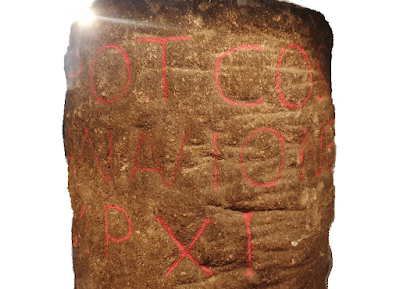
    In 1862, a Roman milestone was found in Buxton's Silverlands neighborhood. 


    It is the earliest engraved landmark discovered in Derbyshire. 

    The writing reads "TRIB POT COS II P P A NAVIONE M P XI," which translates as "From Navio 11 miles. 

    With the authority of the tribune, twice consul, father of this land." Near the modern community of Brough lies where the Navio Roman fort once stood. 

    Roman artifacts were discovered in the Silverlands region in 1903 during excavations by local archaeologist Micah Salt, including a silver coin, tiles, leather sandals, gritstone hearths, glassware, and several shards of exquisite Samian pottery. 

    According to pottery inscriptions, it was created between 60 and 100 AD in Verulamium (modern St Albans). 

    The Buxton Museum has the milestone and other Roman artifacts on exhibit. 

    Additionally, when Buxton's Town Hall was constructed at the northern end of the market place in 1811, a significant number of Roman relics were also found there. 

    Roman floor slabs were discovered in the basement of 3 Hall Bank near the Town Hall in 2006, while 8A Hall Bank had significant Roman stonework exposed. 

    In the neighboring Poole's Cavern in 1865, Roman coins and Romano-British copper jewelry were also discovered. 

    In 1903, a gritstone shrine honoring Arnemetia (Arnomecta) was discovered in the Principia strong chamber of Navio fort (headquarters building). 


    "To the goddess Arnomecta, Aelius Motio cheerfully, voluntarily, and rightly fulfilled his pledge," reads the inscription on the altar. 

    The Buxton Museum also has the altar on exhibit. 

    Batham Gate and The Street, two important Roman thoroughfares, intersected near Aquae Arnemetiae. 

    A Roman route leads from Templebrough Roman fort in South Yorkshire across Navio Roman fort and towards Buxton. 


    Batham Gate (Old English for "way to the spa town"). 

    This ancient Roman road's path on Tideswell Moor is classified as a Scheduled Monument. 

    This was a crucial route for getting to the Peak District's lead producing locations. 

    The Batham Gate road, which leaves Buxton towards the east, is still in existence. 

    The Street route (Margary Number 71a) left Derventio (Derby) and headed south of Buxton before meeting the contemporary A515 road in certain areas. 

    The Street is still the name of the route that may have linked Buxton and Condate in the Upper Goyt Valley (Roman Northwich). 

    By The Street road, next to Arbor Low, there is a plaque in a stone wall (at OS map location SK 1649 6232). 

    The Roman route from Buxton to Little Chester (Derby) is shown by the marking "Aquae Armentiae Derventio." "Huius viae curam curatores viarum non susceperunt" is written below. 

    The literal translation of this is "The road menders have not maintained this road." In the north, there were Roman roads that went to Mamucium (Manchester) and Melandra fort, both close to Glossop (Margary Number 71b). 

    These two northbound rounds' agger pieces have been located and dug. 

    Between Buxton and Leek, there was also a Roman Road (Margary Number 713), which may have been the Roman town of Chesterton. 

    Its path connects to the current A53 road heading into Leek near Morridge Top. 

    Edward Tristram inferred the potential site of a fort in the town to the south of the market area by the present-day Bath Road in 1916 as a result of the roads' junction at Aquae Armetiae. 

    The entrance to the bigger fort of Melandra, northwest from Navio Fort, was guarded. 

    The substantial Centurial stone with inscriptions that was discovered at Navio in 1903 was part of the fort's reconstruction in 154 BC by invading troops from southwest France. 


    The Buxton Museum has the Centurial Stone on exhibit. 

    Buxton is still identified on OS maps by its Roman name, Aquae Arnemetiae.


    References And Further Reading:


    • Patterson, M., 2016. Roman Derbyshire. Five Leaves Publications.
    • JFitzpatrick-MATTHEWS, K.E.I.T.H., 2022. BRITANNIA IN THE RAVENNA COSMOGRAPHY: A REASSESSMENT (REVISED 2022).
    • Shepherd, Brian. Roman Buxton - A tourist guide to the town and spa baths. ISBN 9780956185570.
    • "Sacred Waters and Altars". Buxton Museum and Art Gallery. 15 March 2019. Retrieved 4 April 2022.
    • Armitage, Jill (2020). Celtic Queen: The World of Cartimandua. Amberley Publishing. ISBN 9781445684161.
    • Makepeace, G A (1995). "THE ROMANO-BRITISH SETTLEMENT AT STADEN NEAR BUXTON". Archaeology Data Service. Retrieved 4 April 2022.
    • "Roman Buxton – Silverlands". www.wondersofthepeak.org.uk. Retrieved 4 April 2022.
    • "Archeology". Pooles Cavern & Buxton Country Park. Retrieved 4 April 2022.
    • Historic England. "Batham Gate, Roman road (1007051)". National Heritage List for England. Retrieved 4 April 2022.
    • Leach, John (1987). The Book of Buxton. Baracuda Books Limited. pp. 27–31. ISBN 0 86023 286 7.
    • Tristram, Edward (1916). "Roman Buxton". Derbyshire Archaeological Journal. 38: 84–104.
    • "The Stones of Navio". www.wondersofthepeak.org.uk. Retrieved 4 April 2022.
    • OL24 White Peak area (Map). 1:25000. Explorer. Ordnance Survey. West sheet.


    Goddess Copia, The Roman Divinity Of Abundance And Plenty


      Copia is the Goddess of prosperity in Roman mythology. 


      Copia bestows riches and plenty to her devotees. 


      Wine and food are offered in her honor, symbolizing the earth's abundant bounty. 

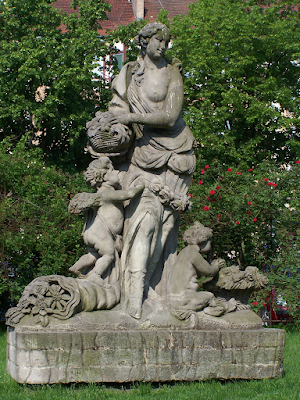
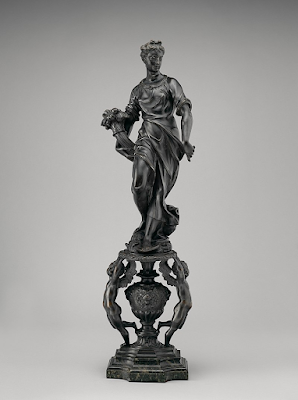
      She's seen holding a cornucopia full of fruits, grains, and gold money.

      The Roman goddess of plenty is called Copia. 

      Her name has extra connotations that include "resources," "wealth," and "opportunity," as well as "plenty" or "plenty." 


      She is one of several Roman goddesses that stand for a glorification of a virtue, like Concordia, the goddess of harmony, or Aequitas, Equity. 

      The cornucopia, also known as the "horn of abundance," was a large goat's horn that was filled with money and food. It was most often used to represent coopia. 


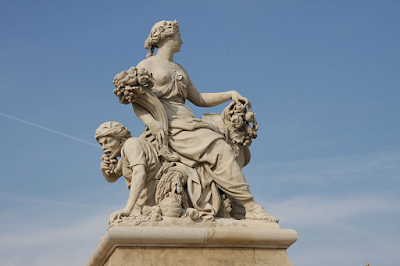
      A sculpture by Antoine Coysevox called L'Abondance par Coysevox is located at the Palace of Versailles.


      There was a town in southern Italy named Sybaris that the Greeks had founded in the eighth century BCE as a component of their colony known as Magna Graecia ("Greater Greece"). 

      The Greeks made Sybaris renowned for its lavish customs; the area was at the time highly fruitful, and the inhabitants there prospered to the extent that the term "sybarite" has come to mean someone who enjoys luxury and sensual pleasures. 

      Although the city itself was on the Crathis River, it was established close to a river of the same name. 


      The ancients gave the Sybaris River (also known as the Crathis) certain peculiar powers, such as the ability to make sheep and cow pelts black while only changing the color of human hair to white or yellow. 

      Some people describe this outcome as "gilding" the hair, which sounds like the river was speckled with gold dust, but possibly it had to do with the water's chemical makeup, which effectively bleached the hair. 

      Additionally, it was said that animals that drank from the waters would grow timid and that the waters made horses sneeze. 


      All of that, however, can be interpreted as metaphors for the city and the way in which its inhabitants were perceived—as timid, vain (with bleached hair), rich, and unmanly—even though there must have been some recognition of the benefits of luxury since the waters of the Crathis were also thought to have therapeutic qualities. 

      Only 200 years after its establishment, Sybaris was destroyed by an army from the nearby city of Crotona, who even went so far as to divert the Crathis to flow over its remains in order to prevent its quick resettlement. 


      What does Copia, our goddess of plenty, have to do with all of this? Well, when the Romans founded a colony at the ancient location of Sybaris several hundred years later, they gave the city the name Copia in recognition of its former distinction. 

      Copia is linked to Fortuna, who is shown with a cornucopia, and the Goddess Abundantia is theoretically connected.


      Romanized version of a Greek statue of Fortuna from the fourth century BC


      What Does The Name Of Goddess 'Copia' Signify?


      Copia, also known as Abundita, was a heavenly embodiment of wealth and plenty in the religion of the ancient Romans. 

      The word "Copia" signifies plenty or wealth. 


      Given that Copia was a goddess of wealth, cash flow, prosperity, fortune, treasures, and success, the name is appropriate. 

      She would aid in safeguarding your money and savings. 

      Copia would even help with significant purchases. 

      She was one of the religious propaganda's depictions of virtue that portrayed the emperor as ensuring "Golden Age" circumstances. 

      Thus, Copia appears in literature, religion, and art but has little actual mythology. 


      She could have persisted in some capacity in medieval France and Roman Gaul. 

      The cornucopia that Copia would transport included both grain and money. 

      She sometimes left some of her grain or cash as a present at someone's home. 
      Copia worship is a thing. 

      In the legend of Acheloüs, the river deity, whose horn Hercules tore from his forehead, the Augustan poet Ovid grants Copia a part. 


      The Naiads took the horn and turned it into the cornucopia they gave to Copia. 

      Diverse aetiological myths provide different theories for the genesis of the cornucopia. 

      [More information required] She was equated with Annona, who represented the grain supply, and Ceres on Neronian currency. 

      Similar to Annona, Copia displayed virtue in public spaces like the waterfront, where grain was brought into the city. 

      She is seen on Roman coins either holding the cornucopia or emptying it of its contents' richness. 


      Atop rare occasions, she is seen standing on a ship or holding a stalk of wheat. 

      What her presence aboard ships denotes is uncertain. 

      This can represent the riches that the Roman Empire gained via its conquests. 

      Numerous emperors' medals include the image of Copia. 


      Like Trajan, Antoninus Pius, Caracalla, Elagabalus, Severus Alexander, Gordian, Decius, Gallienus, Tetricus, Probus, Numerian, Carinus, Carus, Diocletian, and Galerius, to name a few. 

      She is shown next to one of the following inscriptions: Augustorum Nostrorum, Augustorum Augg NN, and Augustia Aug. 

      As a representation of "the richness that comes from Mithras' deed," Mithraic imagery on a vase from Lezoux in the Roman province of Gallia Aquitania shows this god sitting and holding a cornucopia. 

      A fountain at Pompeii had a picture of Copia. 


      Was Copia Worshipped As A Gallic Goddess?


      The Gallic goddess Rosmerta has been compared to Copia, however the two are never explicitly mentioned together in inscriptions. 


      A Domina Abundia ("Mistress Abundia") is mentioned by William of Auvergne (d.), a bishop of Paris, and she is referred to as "Dame Habonde" in the Roman de la Rose. 

      The name of the bishop comes from abundantia. 

      The dominae enter homes at night where offerings have been placed for them. 

      However, the contents of the containers remain unaltered as they are consumed. 

      They offer wealth and fecundity if they are pleased. 

      William believed that these customs amounted to idolatry. 

      These individuals were seen as Celtic fairies by folklorists. 

      According to Nicholas of Cusa, he saw two elderly ladies who claimed to work for Domina Abundia while traveling through the French Alps in. 

      They identified as apostate Christians who had been held captive for practicing witchcraft. 

      Nicholas believed that while they had been deceived by the devil, they should be given the opportunity to atone rather than being burned at the stake. 


      How Is Copia Portrayed In Modern Art?


      Copia is often seen with her cornucopia and sheaves of grain or wheat in later Western art.

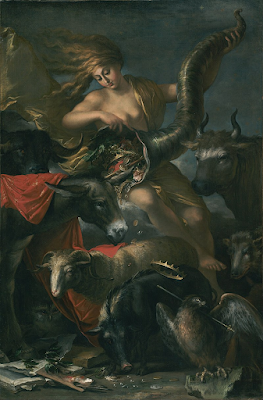
      Salvator Rosa's 1658 work, Allegory of Fortune, features the horn of abundance as Fortuna, the goddess of luck.


      The cornucopia is generally shown in contemporary art as a hollow, horn-shaped wicker basket that is filled with a variety of celebratory fruits and vegetables. 


      The cornucopia has come to symbolize Thanksgiving and the harvest in the majority of North America. 

      The annual November Food and Wine festival in Whistler, British Columbia, Canada, is also known as Cornucopia. 

      Personifying the Americas as the New World by using an alligator, a parrot, and a cornucopia


      Idaho's flag and state seal both include two cornucopias. 

      Liberty stands on the Great Seal of North Carolina as Plenty holds a cornucopia. 

      A North Carolina state seal depicting a Cornucopia.


      The cornucopia, a sign of plenty, is also seen on the coats of arms of Venezuela, Peru, Colombia, Panama, and the State of Victoria in Australia. 

      Columbia's Coat Of Arms


      Chile's Coat Of Arms


      Seal Of The Philippines

      Kharkiv, Ukraine's Coat Of Arms


      Tiffany Aching, a witch in Terry Pratchett's Discworld series of fantasy books, temporarily held the Cornucopia, which is Summer's badge of office, until she developed avatarism and ped fecundis during the events of Wintersmith. 

      By spitting up food and animals, including a large flock of hens, this presents issues. 

      The Hunger Games novel series makes use of the cornucopia concept. 


      A massive horn-shaped cache packed with weapons and equipment is put before the beginning of the series' titular gladiatorial matches. 

      This cache, which is referred to as the "Cornucopia," acts as the center of combat during the first minutes of the match. 

      The national anthem of Panem, the main location of the series, is referred to as "the Horn of Plenty" in the film version, and it is referenced multiple times in the lyrics. 

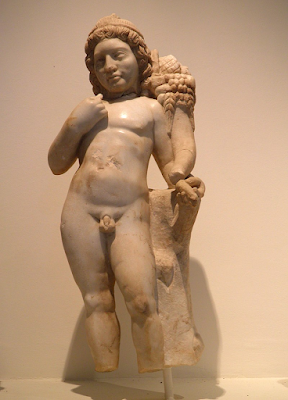
      Harpocrates with a cornucopia, a figurine from the Hellenistic era, is shown at Dion's Archaeological Museum (Dion, Greece)


      As a symbol of fertility, good fortune, and prosperity, the horn of plenty is utilized as body art and at Halloween. 

      The Statue of Flora in Szczecin, Poland, has a cornucopia.


      How Is 'Cornucopia' Derived From The Name Of Goddess 'Copia'?

      Rubens' allegorical representation of the Roman goddess Abundantia holding a cornucopia (ca. 1630)


      The cornucopia, also known as the horn of plenty and deriving from the Latin words cornu (horn) and copia (plenty), was a representation of abundance and sustenance in ancient antiquity. 


      It was often a big horn-shaped receptacle filled to the brim with fruits, flowers, or nuts. 

      Western Asia and Europe have long utilized baskets or panniers of this kind to store and transport recently gathered foods. 

      The harvester's hands would be free to pick while the horn-shaped basket was carried on the back or draped over the torso. 


      How Was Goddess Copia Worshiped In Greek and Roman mythology?


      The genesis of the cornucopia is explained in a variety of myths. 


      The birth and upbringing of Zeus, who had to be concealed from his devouring father Cronus, is one of the most well-known. 

      Baby Zeus was taken care of and guarded by a multitude of heavenly attendants in a cave on Mount Ida on the island of Crete, including the goat Amaltheia ("Nourishing Goddess"), who fed him with her milk. 

      As a little child, the future king of the gods possessed extraordinary strength and talents. 

      When he was playing with his nursemaid, he accidently cut off one of her horns, which was endowed with the divine ability to supply endless sustenance just as the god's foster mother had done. 

      In a different tale, the cornucopia was created when Heracles (Roman Hercules) engaged in combat with the river deity Achelous and severed one of his horns; river gods were often shown as having horns. 

      The mural painting Achelous and Hercules by American Regionalist artist Thomas Hart Benton depicts this variation. 


      A number of Greek and Roman gods adopted the cornucopia as their symbol, especially those who were connected to the harvest, prosperity, or spiritual abundance, such as personifications of Earth (Gaia or Terra), the son of the grain goddess Demeter and god of riches, Plutus, the nymph Maia, and Fortuna, the goddess of luck who could bring about prosperity. 

      Abundantia, who represents "Abundance," and Annona, the goddess of Rome's grain supply, were two abstract Roman goddesses who promoted peace (pax Romana) and prosperity in the Roman Imperial religion. 

      Girolamo Campagna's bronze Allegory of Peace, created in the late 16th and early 17th centuries and based on designs from about 1585–86


      Hades, the ancient underworld lord in mystery religions, is often seen holding a cornucopia in artwork. 

      He was a provider of material, spiritual, and natural prosperity.


      References And Further Reading:


      • Joseph Spence. Polymetis: Or, An Enquiry Concerning the Agreement Between the Works of the Roman Poets, and the Remains of the Antient Artists: Being an Attempt to Illustrate Them Mutually from One Another. In Ten Books. R. Dodsley, 1747, p. 148.
      • "Abundantia, Roman Goddess of Abundance". www.thaliatook.com. Retrieved 2020-09-10.
      • Virtue, Doreen (2005). Goddesses and Angels. United States of America: Hay House. p. 215. ISBN 978-1-4019-0473-9.
      • J. Rufus Fears, "The Cult of Virtues and Roman Imperial Ideology," Aufstieg und Niedergang der römischen Welt II.17.2 (1981), p. 812.
      • Ovid, Metamorphoses; 9.87–88, as cited by Fears, p. 821.
      • Universal Technological Dictionary Volume 1. London: Baldwin. 1823.
      • Manfred Claus, The Roman Cult of Mithras: The God and His Mysteries, translated by Richard Gordon (Routledge, 2000, originally published 1990 in German), p. 118.
      • Paul-Marie Duval, "Rosmerta," American, African, and Old European Mythologies (University of Chicago Press, 1993), p. 221.
      • Edward Burnett Tylor, excerpt from Primitive Culture, in Understanding Religious Sacrifice: A Reader (Continuum, 2003, 2006), p. 22.
      • Alan E. Bernstein, "The Ghostly Troop and the Battle over Death: William of Auvergne (d. 1249)," Rethinking Ghosts in World Religions (Brill, 2009), p. 144.
      • Benjamin Thorpe, Northern Mythology (London, 1861), vol. 1, p. 281; Jacob Grimm, Teutonic Mythology (English translation London, 1880), pp. 283–288.
      • Hans Peter Broedel, The Malleus Maleficarum and the Construction of Witchcraft: Theology and Popular Belief (Manchester University Press, 2003), p. 109.
      • Jürg Meyer zur Capellen, Raphael: The Roman Religious Paintings, ca. 1508-1520 (Arcos, 2005), p. 264.
      • David Leeming, The Oxford Companion to World Mythology (Oxford University Press, 2005), p. 13; Robert Parker, Polytheism and Society at Athens (Oxford University Press, 2005), p. 422.
      • Ovid, Metamorphoses 9.87–88, as cited by J. Rufus Fears, "The Cult of Virtues and Roman Imperial Ideology," Aufstieg und Niedergang der römischen Welt II.17.2 (1981), p. 821.
      • Kevin Clinton, Myth and Cult: The Iconography of the Eleusinian Mysteries (Stockholm, 1992), pp. 105–107.


      Goddesses Of Time And Seasons


      The concept of time appears as a goddess in several cultures. 

      In Hindu India, Nidra is the sleep of time, whose passage is beyond human control, while Kalı represents the many eras of the worlds life, with the final era named after her. 

      In North America, the Cherokee saw time as ruled by the sun goddess Unelanuhi, who divided night from day and thus invented all measurement. 

      Among the pre-Roman Etruscans, time was the goddess Nortia, in whose honor nails were pounded each year into her temple. 

      The later Roman Juno represented time as embodied in womens passage through lifes stages, with multiple Junos representing each woman as she aged. 

      Some time goddesses are also foretellers of fate, as was Arabic Manat (see Eastern Mediterra nean), Finally, many goddesses are associated with the period before day was divided from night. 

      These divinities appear in a primordial, often chaotic ‘‘time before time, and are often creatrixes who form the universe. 

      Many goddesses, especially earth goddesses, are associated with specific seasons that paralleled the seasons of a womans life. 

      Spring goddesses (Roman Flora, Greek Hebe, Slavic Kostrubonko, Scandinavian Rana Neida) are typically young and sex ually active or even promiscuous, unburdened by children. 

      They are kind and gener ous, beautiful and tender. 

      Often spring goddesses are associated with dawn, both representing the promise of new beginnings. 

      Just as dawn goddesses (see Light/Day, above) could be dangerous as well as desirable, so figures connected with spring, like Slavic Rusalki, could present themselves as threatening. 

      Spring was a time of hunger to subsistence farmers, who had devoured their stored crops and were awaiting new growth. 

      Even for gathering-hunting cultures, spring could be difficult, so in the Arctic we find Asiaq (see Circumpolar), to whom shamans made sacrifices if ice did not break up in the rivers, allowing fishing. 

      Thus maiden spring goddesses such as Greek Persephone were connected to death, an ever-present danger in hungry springtime. 

      Summer goddesses, by contrast, are typically maternal, indicative of the earth in its agricultural abundance. 

      Like Roman Ceres (from whom we derive the word ‘‘cereal), these goddesses are often associated with food plants, which flourish in summer weather (see also Vegetation, below). 

      In North America, such goddesses could be embodied in the important food-crop, maize or corn; see Selu and Oniata. 

      Such goddesses are typically depicted as mature and fertile, women in the prime of their reproductive years. 

      But in desert lands, summer goddesses could appear as threat ening, as with Egyptian Sekhmet who represents the scorching sun, or Sri Lankan Pattinı (see India) who began as a gentle woman but became rage-filled and destruc tive later. 

      It might be assumed that autumn goddesses would represent decline and death, but fall is a season for both harvest and the hunt. 

      Thus goddesses connected with autumn could be paradoxically both fertile and deadly. 

      Some, such as Irish Tailtu, were sacrificed in order to provide fertility to the land, while in other cases such as Slavic Baba Yaga, they threatened others with death by devouring. 

      In Mesoamerican ritual, a mature woman assumed the identity of Toci and was sacrificed and flayed at her har vest festival. 

      Other autumn goddesses (South American Pachamama, Greek Demeter, Roman Pomona) were goddesses of abundance, appropriate to harvest sea son. 

      These goddesses are typically shown as a woman past the prime of life but still vigorous. 

      With the Irish Cailleach, this vigor included sexual appetite; this divine female could exhaust and even kill young men with her demands. 

      Winter goddesses, typically envisioned as old women, are often threatening. 

      This is hardly surprising, as winter in earlier times was a time of hardship and want. 

      Winter goddesses are shown with the power to control the weather (see Weather, above). 

      Thus they were to be propitiated, lest they grow angry and bring on dangerous storms. 

      The Scandinavian winter goddess appeared as a pair, with friendly Holle shaking her feather beds to make snow and rewarding those pleasant to her with gold, while her twin Perchta roamed through the world looking for people to punish for minor infrac tions, bringing bitter cold with her. 

      Some winter goddesses are paired with a spring deity. 

      In Scotland, the Cailleach appeared with the girl Bride, who spent winter trying to escape the hags grasp. 

      Finally, some winter divinities are witches (Roman Befana, Finno-Ugric Louhi) who kidnap good weather and growth, holding it hostage until spring. 

      ~ Kiran Atma

      You can learn more about Goddess Symbolism here.


      Goddess Worship In Italy


        The spirit and inspiration of the Divine Female permeate the whole fabric of Italy, whether it is in a quiet city square or a bustling museum. Her obelisks in Rome's Saint Peter's Square at the Vatican symbolize the site of historic lyceums, or institutions for studying Goddess mysteries. Her statues are still present at Malta's megalithic temple complexes, which are located just south of Sicily. 

        You may discover sculptures, objects, and fabrics showing her from Paleolithic to modern times by entering the Louvre in Paris or museums in Turin, London, Naples, or Ankara. Amazing cave paintings from Lascaux, France, from 15,000 BCE depict her. She may also be seen in palm-sized items that are touching, like the Venus of Willendorf (25,000 BCE), which was discovered in Austria. 

        In Ostia Antica, there is a temple or sacellum called Bellona that is devoted to the Italic goddess Bellona, who may have been combined with Magna Mater.

        The deep beauty and spirit of the Goddess continue to inspire and be suggested by tapestries like La Dame a la Licorne, The Lady and the Unicorn, which is housed at the Cluny Museum in France. The adventurous pilgrim traveling to holy places throughout Europe will encounter all of this. 


        Goddess Worship In Pompeii.


        The partly discovered city of Pompeii, which was left behind when Mount Vesuvius erupted in 79 CE, offers a rare window into a history that has been frozen in time. Travelers may still read graffiti and ads on walls and floors in Pompeii, as well as enjoy mosaic tile flooring and look out for carriage wheel ruts on the stone pavement. 

        One might imagine hearing and smelling the activity of long ago. In addition to stadiums, brothels, temples, and private residences, there are villas to discover. Even some of the impoverished people's bodies who perished in the volcanic explosion have been preserved for interested people to see. One of the most well-preserved buildings in this enormous metropolis is the Temple of Isis, which stands out as the ideal illustration of Isis worship as it developed outside of Egypt and into the Greco-Roman world. 

        All around the Mediterranean area and Asia Minor, immigrants, sailors, warriors, merchants, and her priesthood of men and women sung Isis' praises. She mixed with the native deities in various other nations. In reality, the worship of Isis was once fiercely competitive with that of other mystery religions, including the cult of Mithras and young Christianity, due to her popularity across the known globe. 

        If Western civilization might have evolved on a matriarchal foundation, Isis "may have been too tenacious a mistress to dethrone," claims R. E. Witt in Isis in the Ancient World. Some elements of Isis worship did alter as it spread outside of Egypt. 

        Instead of the exotic and green-hued Osiris, Isis was now married to the Ptolemaic hybrid deity Serapis. Serapis was an Egyptian version of Osiris-Apis that was Hellenized, avoiding the animal head representations of Egypt that the Greeks and Romans misunderstood. 

        They were unaware that the powers of the animals they mirrored were inherent in these deities. Harpocrates, Anubis, and Horus all traveled with Isis when she left Egypt. (In the Vatican Museum, there is an intriguing statue of a Hellenized Anubis that evokes images of Scooby Do.) 

        Isis sometimes had her own temple or often shared a temple with a local goddess, although many other ancient Egyptian goddesses were becoming less popular in many nations. In certain cases, like with her sanctuary at Delos, her temple was not centrally positioned but rather was situated on the outside of the city in a zone designated for foreign deities. 

        However, this was not the situation in Pompeii, a significant Roman city close to the port of Ostia, where grain from Egypt often came to feed Rome. Here, on great real land, was the Isis temple. Isis was immensely popular among the Roman aristocracy, and the city of Pompeii and many of its citizens' lives revolved around her temple. 

        Processions were a ceremonial component of Isis worship in Pompeii that may have originated in Egyptian ritual. It is difficult to determine where the tradition originated since we know Mesopotamia also used ceremonial processions. 

        The massive temple estates constructed in the Egyptian style, however, have vanished, even at Pompeii. Iseums, or temples to Isis on foreign country, were more humble but nevertheless followed many Egyptian customs. They were a subterranean crypt under the surface-level temple building. The crypt was used for rituals, ceremonies, and storage. 

        The Nilometer was vital in Egyptian temples because it assessed the life giving water level of the Nile upon which life, fertility, and wealth relied. It was still in use in Pompeii but had been changed to become a more symbolic object. Evidence suggests that several iseums and mansions of the Isian priests, such the one belonged to Loreius Tiburtinus, were built with permanent water channels that may represent the Nile flood waters spilling. 

        The usage of holy ritual pitchers and situlas, or sacred pails, may be seen in murals of processions and scenes on temple walls, even if adherents of the faith outside of Egypt progressively lost touch with the ancient meaning of Nile water. 

        These probably held Nile water that was transported or utilized in rituals; this would be a more practical method to include the Nile's customary significance during Egyptian worship while distant from the real source. Even though Isis' temple was modest by the standards of a normal contemporary Christian church, it was prominently situated next to a theater, the Forum, and the temple of Asclepius and Neptune in the public square at Pompeii. The temple was located in the middle of the compound's holy quadrangle. There were a number of round columns at ground level in front of the temple. 

        There were three additional round columns to the left and right before entering the pronaos, or front hall, which was a little under 98 square feet (30 sq. m) in size as one ascended the seven stairs to the temple proper. The inner chapel, or cella, which was located behind the pronaos, included two pedestals for sculptures of Isis and Serapis. 

        The whole structure was covered with paintings that included images of Isis and Io, ritual practitioners, priests, floral trellises, the mummy of Osiris, Anubis, Isis wearing an ankh, Perseus rescuing Andromeda, Mars, and Venus. 

        There were several altars and niches as well. The Purgatorium, where the Nile water was kept, was located on ground level only a few meters from the temple. There was a subterranean Megaron or tomb below this, perhaps used for initiations. The Isian priesthood's quarters and the initiates' gathering place were at the back of the temple. 

        According to fresco paintings, men and women had equal status in the Isis priesthood. Priests were shown wielding the sistrum, or ancient rattle, and the caduceus, while the priestess was clutching a baton. Both priests and priestesses are shown carrying out religious obligations. 

        A cake-carrying priestess with a snake on her head is engraved on a cup, while the priest is seen holding a censer. A other goblet depicts the priestess wielding a sistrum and situla while encircled by a snake. Hydeion, a long-spouted pitcher often used to transport water from the Nile, is being carried by the priest. Stories of other gods and goddesses did not get outside of Egypt as the worship of Isis increased. 

        The story of Isis and Osiris persisted outside of Egypt, and via more widely celebrated Isian festivals, the general population was educated about Egyptian practices. One such open-to-the-public event was the Ploiaphesia, also known as the Isidis Navigium or Sailing of the Ship of Isis, which took place on March 5 every year. Although it started in Egypt, this holiday was also celebrated in cities like Pompeii. 

        This signaled the start of the sailing season. Large segments of the society, including the Isis priests, took part in the ceremonial procession. Isis, the goddess of the sea, was called upon to provide the sailors and merchants safe passage over the oceans, trade with friendly nations, and return home with the supplies they needed for everyday living.

         The ceremonial ship, known as the Ship of Isis, was sent out to sea as an offering to the Goddess in Pompeii, as in other locations honoring this event, after being laden with gifts and prayers. 

        At the beginning of the third century CE, Isis worship peaked. Secret rituals, regular services, and several festivals open to everybody were all part of the cult's secrets. She was revered as a goddess of knowledge who had magical abilities and understanding of the secrets of life and death. As shown by the following inscription from Capua, Una quae es omnia, dea Isis, or "Thou who, being one, art all, Goddess Isis," she came to be seen as the one Goddess by many, broadening the more original Egyptian notion of a transcendent monotheism. 

        The worship of Isis in Pompeii gradually and firmly gained hold of the aristocracy until it became the city's semi-official religion, while the cult of Isis developed among the slaves and families of freed men hired by the great mansions of the affluent. In homage to Isis, Roman emperors had sculptures made of themselves dressed in Egyptian garb. Daughters of regular people and prominent government figures dedicated their life to Isis as priestesses. Rich people honored her with shrines in their gardens. We know this because Pompeii was astonishingly well preserved for more than 1,700 years after Mount Vesuvius' explosion on August 24, 79 CE. 

        Modern archaeologists excavating the ruins came upon an almost flawlessly preserved window into a historical event. Numerous Goddesses and Divine Feminine temples may be found throughout the enormous metropolis of Pompeii. The Temple of Venus, Temple of Fortuna, and Villa of Mysteries have all undergone excellent restorations. Numerous bright frescoes provide a sense of the creativity and vibrancy of those early times. The bordellos are also fascinating, however there are a lot of depressing small cubicles and phallus symbols that symbolize fertility to be found there. 

        How to reach Pompeii. 

        The contemporary and welcoming city of Pompei lies next to the ancient city of Pompeii, which is best accessed via a guided trip. However, if one is prepared for the bother of navigating the Italian railroad system, one may also take the public train. The Pompeii-Villa dei Misteri station on the Circumvesuviana is roughly a 30-minute journey from Naples. You are dropped off outside the site's western entrance. The Circumvesuviana to Pompei-Santuario station, which is located at the eastern entrance to the sites, is another option. Daily trains and tours regularly depart from Rome for Pompei; the sight deserves a full day. The facility has a great café where you may get lunch or a refreshing beverage, and the toilets are maintained spotless. Bring a hat, sunscreen, and a guidebook. 


        Goddess Worship In Rome.


         It would be hard to choose just one place to worship the goddess throughout the whole city of Rome. How are you going to stop at one? You really can't. Readers will profit from the author's passion for all the locations that are going to be highlighted since so many places scream "Goddess." As tourists discover more than ten attractions in one, prepare to get a little something extra, or lagniappe, as they say in New Orleans! 

        Get on board as the bus leaves for a tour of Rome's holy places to the goddess! Starting point: Palatine Hill. The Palatine Hill, next to the Colosseum, previously housed affluent houses in ancient Rome.

        The English word "palace" is sprung from the word palatine. There is a lot of history on the Palatine Hill. Roman historians claim that the Emperor Caligula was stabbed here, for example. The Sibyls' decrees that Rome would not be victorious against Hannibal until the Cybele meteorite reached the city led to the construction of the Temple of Cybele, which was consecrated here in 191 BCE. 

        The Roman populace delighted in the experience of wild and bizarre celebrations in honor of Cybele when she arrived at Palatine Hill and caused Hannibal to lose. In the years that followed, Rome's conservatives condemned the wild festivals honoring both Cybele and Attis. According to certain ancient authors, the Sibylline On the hill, there were prophetic books, but they were destroyed by fire. 

        The renowned playwrights Terence and Plautus debuted several of their most well-known comedies on a wooden stage set up in front of the Temple of Cybele during the yearly theatrical games. Located south of the Farnese Gardens and immediately west of the House of "Livia," this shrine to the Great Mother still has its tufa platform standing. 

        The hill is also graced with the foundation of temple stones dedicated to Victory and Victoria Virgo ("Maiden Victory"). The shrine formerly had magnificent flooring made of red and white breccia rosa, pink-grey Chian marble, and black slate, as well as tall, thin Corinthian columns.

        A throne in the middle, reclining people holding tympana, and cats on each corner of the triangle made up the pediment's decoration. A headless goddess who had originally been flanked by lions was one among the discoveries at the site. Under the foundation of this temple complex, a tunnel led to the historic Street of Victory. Tertullian (160–225 CE) said that the Magna Mater sanctuary was also located in the center of the renowned Circus Maximus, just below the southern brow of Palatine Hill. An enormous statue of Diana on the spina of this circus, dressed in a mural crown, riding sidesaddle, and flanked by lions, is shown on ancient coins. 

        The Palatine Hill is a maze-like complex of ruins honoring several gods and goddesses. The Basilica or Aula of Isis and a Venus Temple may also be found on Palatine Hill. Simply carry a map, since the location is not well-marked and the personnel is not very helpful. 

        The Roman Forum is located across the street from Palatine Hill and has several partially preserved Goddess temples, including the Temples of Venus, Vesta, and the House of the Vestals. Vesta might be thought as as Rome's divine soul or the vital feminine flame. Since 575 BCE, votive gifts have been made to Vesta, Goddess of the Hearth. The once circular building is said to be a representation of a prehistoric Latin hut where princesses of prehistoric tribes maintained the tribe's fire. 

        The embers of Her temple in Troy were said to have ignited the flames of the Roman Temple of Vesta in antiquity. For one hundred years, temple vestal priestesses were responsible for maintaining the flames of Rome. The Seven Holy of Holies of Rome were safeguarded and maintained by the vestal priestesses. 

        The ashes of Orestes, a needle used by the Mother of Gods, the shields of Salii, the 12 Leaping Priests of Mars, the scepter of Priam, and the veil of Ilione were among these holy relics. The Palladium, a wooden statue of Pallas Athena that was thought to have fallen from heaven and been brought to Rome from Troy, was another. 

        The Romans believed that the city would suffer if the fires weren't kept going or these artifacts weren't protected. Failure to do these chores may result in flogging, exile, or even death as a punishment. 

        Although the word "virgin" goddess is often used to describe an unmarried female who is autonomous and unto herself rather than a chaste condition, virginity was a literal necessity for Vestal Virgins. "Nor will it be said that under (the emperor's) leadership any priestess violated her sacred fillets, and none shall be buried alive in the ground. 

        It is thus that an unchaste (Vesta) perishes because that (Earth) which she violated, in that earth she is interred; and indeed Earth and Vesta are the same deity," wrote the ancient writer Ovid of the punishment for a Vestal Virgin who lost her virginity: " Roman society's value of chastity is explained by scholar Miriam Robbins Dexter. 

        Chastity was regarded as unchangeable, though they did allow for parthenogenesis, or childbirth through a mother without male involvement. It was the duty of chaste Vestal Virgins to channel their divine energy for the benefit of Rome since they were a reservoir of untapped potential, similar to a charged battery. If a woman was neither virginal nor married, Dexter writes, "she constituted an independent challenge to the patriarchal, patrilinear system. 

        In Rome, like in other male-dominated communities, any woman who asserted her own sexual identity was despised and dreaded. Two still-standing temples to the Feminine Divine, the Temples of Vesta and Fortuna, can be found off the beaten path as you move from the Forum toward the Tiber River. The Goddess of Destiny, Fortuna, who is sometimes confused with Isis, is worshipped in a temple that resembles a miniature Parthenon only a few yards from the circular Temple of Vesta. These two Goddess temples in Rome are among the best preserved. 

        The circular temple, which was surrounded by Corinthian columns, was only preserved because it was transformed into a church in 1132 CE and given the name "Saint Stephen of the Carriages." The basilica where nuns used to distribute food to the needy is the Church of Santa Maria in Cosmedin, which is located across the street. 

        Since the eighth century, the church has been connected to the Greek community in Rome, and the name "Cosmedin" may be a reference to the city of "Constantinople." This building formerly served as a temple for the Roman goddess Ceres, who gave us the term "cereal." Goddess enthusiasts claim that the church, which is said to have a subterranean passageway going to the Temple of Vesta across the street, emanates a noticeable "Goddess energy" that makes it seem cozy, secure, and almost like stepping inside a real Sheila-na-Gig, or womb.

        The clean and basic architectural lines of this basilica suggest a mysterious, "out-of-the-way" vibe, almost as if this site was a neglected step-child of the Church, because it lacks the gold plating and crowded façade that often clutter many Christian churches in Europe. 

        Large chandeliers with candle holders hang from the ceiling, and the walls are practically bare but for a few faded flower paintings. The noises and hectic energies of the city are believed to vanish as one enters this church's calm, dark, silence, and one may feel the Goddess' presence. Sacred geometry-like symbols are visible in the church's floor design, and some people also perceive the four basic elements and the spirit. An depiction of what looks to be wheat, representing the goddess Ceres, may be seen behind the main altar. 

        On April 19, the day of her festival, the Cerealia, she was worshipped in Rome. The Circus Maximus, which is close to Palatine Hill, also hosted celebrations for her. Rufus and Lawson claim that it seems like a portion of the old Ceres temple is still there in the church, but hidden from view. San Nicola in Carcere, which is situated right across from Tiber Island and not far from Santa Maria in Cosmedin, is definitely worth a visit if travelers have the time. On the site of the Juno Sospita temple lies this 11th-century church (the Savior). 

        On the south side of the temple from the first century BCE, seven of the original columns still stand, together with a portion of the entablature above them. The ancient pedestal, where Juno Sospita was hailed as a warrior goddess, is in superb shape. 

        The Temple of Juno Regina was the most well-known sanctuary devoted to Goddess in Rome, roughly located where Santa Sabina is now (as confirmed by two dedicatory inscriptions found nearby). The antique wooden statue was transferred to this location on Aventine Hill by the Roman ruler Furius Camillus after the fall of the last Etruscan fortress of Veii in 396 BCE. 

        Two sculptures of Juno Regina made of cypress wood were were erected at the temple in 207 BCE. Juno Regina is often seen next to Jupiter on coins, wielding a long scepter and patera. She typically appears as a queen with a veil, a diadem, and a peacock at her side. 

        The majority of her gifts were made by women, including a bronze figure and a golden bowl in 218 BCE (in 207 BCE). Her direct affiliation with Diana, the Goddess of the Moon and Hunt, which was undoubtedly inspired by her Etruscan origins, was peculiar to Juno Regina on the Aventine hill. 

        Because of this, Diana was transformed into Juno's hostess and the goddess in charge of the asylum (a role that was alien to the Latin Diana but not to the Diana/Artemis of Asia Minor). Meanwhile, Juno herself becomes a rescuer and a protector via this relationship. 

        The little Santa Sabina Church was built here in 422 CE, but the majority of magnificent basilica, with its lovely white Corinthian columns along the nave, is from the ninth century. In the 13th century, the church was taken over by the Dominicans. Without seeing Santa Maria Maggiore, the magnificent church honoring Mary as the "Mother of God," no journey to Rome is complete.

        Legend has it that the Virgin Mary visited Pope Liberius and told him to erect a church exactly where he saw a spot of snow the following day. It was considered a wonder when he discovered snow at the top of the Esquiline Hill the next morning (August 5th), given that Rome was now going through one of their normal scorching summers. 

        Each year, thousands of white petals are released from the church's roof to "snow" on the waiting crowd as a way of remembering this occasion. These were were rose petals, but they are now often dahlia petals. Pope Sixtus III (reigned from 431-440 CE) erected a new basilica there after the church council in Ephesus in 431, during which Mary was acknowledged as bearing God (theotokos). 

        This basilica dates back to the fifth century and has a triple nave. The Virgin Mary is the subject of the majority of the mosaics in the apse, which were created by Jacopo Toritti circa 1295. His obsession with natural themes—birds nesting, flowers blooming, animals crawling, and an abundance of lush vegetation—is peculiar. A medallion showing the Coronation of Mary by Christ amid a canopy of golden stars sits in the middle of this cornucopia of natural beauty. 

        The Temple of Juno Lucina was located on the minor Cispian Hill, just to the north of Santa Maria Maggiore on the Esquiline Hill. At once a holy forest, the precinct ultimately acquired a temple consecrated in 375 BCE. Two old lotus trees that were in the gardens before the temple, according to Pliny the Elder, were revered there. 

        The Feast of the Matronalia was observed here on March 1st. On this day, all wives were expected to receive gifts from their husbands. Although Juno Lucina was strongly linked to a birth cult, nothing more is known about her. Some even believe that Hallmark invented Mother's Day! 

        The Church of Santa Maria in Aracoli, which is located on a historic location that was formerly a temple to Juno Moneta and Cybele, has several goddess emblems. On the marble floor is a bull (associated with Osiris and Adonis) crowned with a star, and three bees are depicted in stained glass high up on the church's entrance wall. 

        Bees were connected to Cybele, Persephone, Demeter, and Artemis, and the number three was considered sacred. Demeter's priestesses were also referred to as melissae, or bees. During the Roman ruler Furius Camillus's battle with Aurunci in 345 BCE, he made a promise to erect the Temple of Juno Moneta in her honor. It was finally completed the following year on June 1st. In 273 BCE, a mint was erected within the temple, hence the epithet "Moneta." 

        The future Roman Emperor Octavian, also known as Augustus, is said to have seen an appearance of a "beautiful lady" here who requested that he construct a shrine for her, according to Anneli Rufus and Kristan Lawson. And the rest is history, as he did. Later on, Augustus had unparalleled success and power. Even though the vision occurred prior to the birth of Jesus, the Church later asserted that the woman he saw was the Virgin Mary. 

        A chapel dedicated to the Christ child is located within the church. On the altar, there are cards and letters from devoted people pleading for their requests to be granted. Goddess worshipers who enter the church believe that the Christ is Horus, the son of Isis, or a young Attis, the son of Cybele, who once had a temple here. In the late 13th century, the entire church façade was rebuilt, and in 1348, the grand steps in front of the basilica were constructed as a gesture of thanks for averting a terrible plague. 

        There are 22 antique columns on each side of the nave, some of which were carved from Aswan granite. The renowned graded ramp going up to the Piazza del Campidoglio, located at the top of the old Capitoline Hill and previously dominated by a large temple devoted to Jupiter, is located just to the south of the stairs leading to the Church of Santa Maria in Aracoli. 

        Two black granite crouching lions that stand up at the foot of this ramp from the sixteenth century are of great importance. The two lions were brought to Rome by the emperor Domitian (81-96 CE) to be used as decorations for the Temple of Isis on the Field of Mars. 

        They were originally from Egypt and may date to the 4th or 3rd century BCE. Both the ordinary people and the aristocracy in Rome maintained a fervent devotion to the Egyptian goddess Isis. She was so admired that there was some debate as to whether the Isian faith or Christianity would become the dominant religion for a while. 

        Several factors contributed to Isis' appeal. Her success was mostly due to her accessibility, but her Egyptian riddles also promised immortality beyond death. Instead of being seen as a hostile and distant masculine deity, her attributes as a strong mother and wife who had experienced adversity in her life alongside those of her devotees led her followers to think that she would empathize with them and hear their pleas. Emperor Domitian, who constructed Isis temples and shrines in and around Rome, was a significant Isis admirer. In about the location of the present-day Piazza del Collegio Romano, Domitian constructed an Iseum of Isis because he was preoccupied with his own afterlife disposition. 

        Three obelisks from the Iseum Campestre, which was once as significant as Saint Peter's Basilica, may be seen at Piazza della Rotunda in front of the Pantheon, Piazza Navona, and Piazza della Minerva on top of an elephant. In the Piazza della Minerva, an obelisk on an elephant dates back to the year 6 BCE. Interestingly, a Christian cross is perched atop every obelisk, including the one in Saint Peter's Square in the Vatican. Since there is no official explanation for the placement of these crosses, some have speculated that it represents Christianity's ambition to symbolically dominate paganism. 

        There is still an Iseum Campestre of Isis and a Temple of Minerva beneath the Santa Maria Sopra Minerva and Saint Ignazio churches. Ironically, this Mary-focused church still uses the name of the goddess who was once worshipped there. 

        Domitian reconstructed the Temple of Isis after the fire of 80 CE, and it is said that Alexander Severus magnificently decorated it with sculptures. The Temple of Isis once stood where the Jesuit Saint Ignazio currently stands (222-235 CE). Four Corinthian columns supported a facade of stairs leading up to the main entrance, which was topped by a deep lunate pediment with a statue of Isis Sothis perched on a dog that was running to the right. 

        A standing figure of Isis may be seen within the inner shrine. The Serapeum, or Temple of Serapis, her spouse, stood near by and was situated immediately beyond a wide gateway split into bays by three columns. 

        The Serapeum was a distinct structure that was rectangular in design and had grand entrances along the square where the Temple of Minerva had stood. The Serapis temple's hallowed area was referred as as the libertines' hangout. A huge marble foot may be seen near the intersection of Via S. Stefano del Cacco to the right of the church if one makes a small detour along Via del Pie' di Marmo. It is believed that this sandaled foot belonged to the adjacent Iseum or Serapeum and may have even belonged to Serapis.

        The Isis religion was well-established in Rome by the reign of Caligula, despite efforts to suppress it by earlier rulers including Augustus, Agrippa, and Tiberius. Although it is difficult to confirm, Tiberius is said to have taken a picture of Isis and thrown it into the Tiber River. Isis rose to become a worldwide deity revered by those who cherished their Mistress of Magic and Wisdom and were seen as their rescuer. 

        Te Isis, te salus ad tuos, which translates to "Thou Isis, thou art salvation to thy followers," was written on a graffito from an Isian shrine in Rome. A sensation of Isis' scarlet chord of life linking them to the web of life and her devotion, past and present, close and distant, is reported by modern Isis devotees who travel the same winding stone alleys that ancient devotees did centuries before. 

        The Vatican Museum should not be missed because of all the rumors and gossip regarding what could be kept in the vaults. Goddess artifacts are so numerous and diverse that they are almost as delicious as going to the Louvre in Paris. 

        The tourist will find hundreds of sculptures of Asian, Greek, and Roman goddesses as well as paintings in the Borgia Apartments dedicated to the Goddess Isis. Particularly lovely is the Egyptian exhibit, which has one-of-a-kind statues not present in other museums. Sekhmet sculptures in a seated position may be seen in outdoor gardens and carelessly positioned in front of gift stores. 

        How to Get to the Goddess Sites in Rome. 

        It's simple to get about Rome. Non-tourists may use the subway, which makes stops at important landmarks and popular tourist attractions, many of which were previously mentioned. For instance, the Coliseum station makes it simple to reach Palatine Hill and the Roman Forum. 

        With the right footwear and a decent map, pilgrims may easily navigate the city on foot. Keep an eye out for pickpockets. It is advised that travelers allot a whole day to the Forum, Palatine Hill, as well as the close-by Temples of Vesta, Fortuna, and the Church of Santa Maria in Cosmedin, all of which are accessible on foot. A whole day is also easily need to see the Vatican Museum. The historic city of Ostia Antica, Tivoli Gardens, and the Villa of Hadrian are a few quick and advised day trips outside of Rome if time permits. All three have links to goddesses.

        ~Kiran Atma

        You may also want to discover and learn more about Female Divinities of the Roman empire here.