Showing posts sorted by relevance for query children. Sort by date Show all posts

Goddesses Of The Earth


The most common symbol for goddesses is the earth, although it can be argued that the symbolism goes the other way around: that goddesses symbolize earth, both as soil and as planet. 

Whichever came first, the connection of goddess and earth is found through out the world. 

It is not, however, invariable. The binary opposition of male/sky and female/earth is sometimes reversed. 

Earth gods are found in some cultures, often asso ciated with sky goddesses, a subject that has not been sufficiently studied to determine its frequency. 

Despite exceptions, however, earth and goddess are connected in many cultures, so much so that goddesses whose symbolism was originally other evolve into earth goddesses over time. 

In some cases, however, writers unthinkingly and inap propriately use the term ‘‘earth goddess or ‘‘earth mother where the divinity in question is a celestial or cosmic figure. 

Earth goddesses are often described as creating the earth (see also Creatrix, below); such goddesses can be described as self-creating. 

In Korea, MaGo created the world by singing, while in Greece, the earth goddess Eurynome created the universe through dance. 

Some earth goddesses do not create the land but populate it by creating humans and animals. 

African Butan was the first creation of the double-sexed primary god. 

She then populated the world without need of mate. 

Earth goddesses often create vegetation from their bodies, the rich soil. 

Because humans and animals require vegetation to survive, earth goddesses are envisioned as benevolent and generous. 

In some cases, the connection between earth and nourish ment is made clear, as with Indian Basmoti who created rice by vomiting it forth. 

This generosity can be seen in the name of the early Greek earth goddess Pandora, ‘‘all giver, or Danish Gefjion, ‘‘gift (see Scandinavia). 

Such images tend to come from cultures that practice agriculture. 

Where people live from fishing and hunting, the goddess of abundance is more typically connected with wildlife (see Animals, below). 

Many earth goddesses are described as maternal forces, providing for the creatures of earth as a good mother provides for her children. 

Some myths put special emphasis on the maternal feelings of the goddess, as in the Greek story of Demeter and her lost daughter Persephone. 

Baltic Zˇ emyna appeared at the birth of every child, and Sibe rian Umay (see Circumpolar, Umaj) was the placenta that feeds the fetus as the earth feeds its creatures. 

Other myths connect goddesses of earth with human fecundity. 

Estonian Ma-Emma (see Finno-Ugric) was the fertile, endlessly pregnant earth, and as such controlled the wombs of young women, permitting them to bear children suc cessfully. 

The Roman earth goddess Anna Perenna responded to the sexual activities of humans by growing more fertile. 

Goddesses like Scandinavian Fulla and Roman Ops, from whose names the En glish words ‘‘full and ‘‘opulent derive, represent both bountiful vegetation and the abundant life expressed in human procreation. 

African goddess Aje was similarly con nected with abundance of all sorts, including food, money, and beloved children. 

She created the soil that bears crops by scratching at it in primordial times, when it was hard as rock and she wore the body of a chicken. 

Hindu Laks˛mı, often represented by coins and bills, began as an earth goddess whose abundance created monetary wealth. 

As an esoteric symbol, she represents spiritual wealth as well. 

The earth has rarely been seen as a solitary divinity. 

Rather, she is envisioned as part of a divine family that includes gods as well as other goddesses. 

At times, the earth was part of a family headed by the maternal sun, as with Finno-Ugric earth goddess Mu kilˇsin-Mumi, whose sister was the sun, or Baltic Z˘ emyna, who was the suns daugh ter. 

In other cases, we find the earth as mother of a clan that includes goddesses of cul ture and of food; the Pawnee earth divinity was Atira (see Native American), whose daughter was the corn goddess. 

Often, the earth mother was the mate of a sky god. 

In Polynesia, the earth goddess Papa lay in perpetual intercourse with her sky husband and had to be forcibly sepa rated from him in order for other life to emerge. 

In Greek myth, earth mother Gaia birthed many children after mating with the sky god but finally grew weary of his end less sexual demands. 

She convinced one of her sons to castrate him, thus ending their endless embrace, after which she gave birth parthenogenetically. 

The Zun˜i goddess Awitelin Tsita lay in continual intercourse with the sky until she conceived the human race. 

Her husband, the sky, solicitously attended upon Maka of the Lakota as she cre ated humanity (see Native American for both). 

Although typically the earth goddess hungered for intercourse, a few earth god desses were unwilling sexual partners. 

Hindu Tarı (see India) refused the solicitations of the sun god, whereupon he created human women to serve his sexual needs. 

Even when the goddess is energetically sexual, many myths describe tensions among the divine family, with the earth mother siding with her children against her spouse. 

The earth goddess is never described in fearsome or negative terms, although she can be seen as a strict keeper of order, as was the case with Greek Themis, who represented the force of law. 

Judgmental goddesses sustain the natural laws and punish those who break them. 

Such goddesses could be punitive, as when the Mongol earth goddess Etugen brought about earthquakes to purify the land of peoples wrongdoing. 

Hindu P rthivi (see India) also showed her displeasure at human failing by shaking fiercely, as did South American Pachamama. 

Because earth goddesses serve as all-seeing witnesses to what transpires on their surface, people turned to them when oaths were required. 

Slavic people held a handful of soil while swearing by Zˇ emyna (see Slavic), and Romans pointed downward toward the earth goddess Tellus when they made a pledge. 

African Ala was a force of social order, for she witnessed all promises and knew instantly when one was bro ken because there was nowhere on earth where one could hide from her. 

Also in Africa, followers of Oddudua devote themselves to maintenance of social order. 

Greek Demeter was known as the lawgiver (‘‘Thesmophoros), for she created the order of the ideal human society as she did for the rest of nature. 

The connection between earth and human society can be detected in the name of the Scandinavian earth goddess Fjo¨rgynn, from which we derive both the words ‘‘earth and ‘‘hearth. 

Just as she could see anything that happened on her surface, the earth goddess could see into the future. 

Thus she represented the force of destiny. 

Iranian A rmaiti (see Eastern Mediterranean) ruled both reproduction and fate, which in many cultures were seen as inextricably linked. 

As the overseer of birth, the goddess was in the position to know the fate of each newborn. 

Just as often, earth goddesses are connected to death, especially in cultures where the dead were entombed within the earth; the dark skin of Russian Mokosh (see Slavic) was not only the color of fertility but of the endless night of death. 

The earth goddess was literally the earth beneath our feet. 

Siberian Mou-Njami had soil for skin and green grass for hair. 

In that culture, digging into the earth was forbid den, because to do so would be to injure the goddess. 

Southeast Asian Ponniyamman is depicted as a rock head, sitting on the earth, which forms her body. 

Some goddesses occupy specific and delimited areas of land—for example, mountains. 

One of the worlds most famous peaks is named for the Hindu goddess Annapur˛na (see India). 

Sometimes a single peak is designated as the embodiment or residence of the goddess, as in the Irish triad Bandba, Fodla, and E riu, or the Native American goddess Tacoma of the mountain that bears her name. 

In other cases, goddesses occupied entire mountain ranges, such as Celtic Echtghe, after whom low hills in County Clare are named. 

Occasionally the goddesss mountain is an imaginary one; Xiwang Mu of China was envisioned as occupying the supernatural Jade Mountain. 

Volcanoes were commonly imagined as goddesses, but connected with fire rather than earth (see Fire, below). 

Goddesses inhabited and embodied forests. 

Because these forests were important sources of wild food, Celtic Ardwinna and Greek Artemis were connected with hunt ing, while Finno-Ugric Vir-Azer-Ava was associated with foraging for berries and mushrooms. 

But dense forests could also be dangerous. 

Thus threatening figures were described as ready to kidnap people who lost their way in the woods, like the Scandi navian Skogsnufvar (see Buschfrauen) who froze people to death for wandering in her domain. 

Mountain and forest goddesses can be seen as specialized forms of the earth goddess. 

Another category was the territorial goddess who represents not the entire planet but the region occupied by a single group. 

The alternative name of the Roman Tellus was Italia, a name also given to the long mountainous peninsula she ruled. 

In India, multiple goddesses called by the generic Gramadevata represent the land on which a villages people depended. 

In Ireland, land goddesses often appear as god desses of the watershed, showing the necessary connection of earth and water for fer tility (see Celtic Aveta, Sequana, Berba, Boand, Sınann). 

Given the frequency of association of goddess and earth, it is not uncommon to find earth goddesses also iden tified as goddesses of water, abundance, and creation. 

~ Kiran Atma

You can learn more about Goddess Symbolism here.


Goddess Akhushtal


    Mesoamerican Goddess of childbirth, Akhushtal. 


    • Akhushtal is the Mayan  god that oversees the whole process of childbirth, from conception to delivery. 


    Mayan Midwifery And Society. 


    Midwifery is a female-dominated profession that aids women from conception until postpartum care. 


    Akhushtal goddess of midwifery is worshipped in certain Maya tribes, and midwives are said to be allocated their vocation via signs and visions. 


    Ixchel was the name of the pre-Spanish Yucatan deity of the old midwife.

    Childbirth is the Maya's ultimate rite of passage, completing a girl's transformation to womanhood.

    Many women who give birth in remote regions are cared for by midwives who have no official training but are said to have gotten instruction in dreams by the Maya religion. 


    Traditional birth attendants are referred to as comadronas or iyom kexelom, and their work is regarded with respect.


    Maya midwives are in charge of the ajtuj ("pregnant lady") and her unborn child during the pregnancy as well as the week of bed rest after the delivery. 

    Unlike other communities, the Maya believe that they receive a holy calling from God via dreams, allowing them to perform their intended career. 


    The midwife's calling is divine, and she has the ability to speak with the supernatural realm.


    Though midwives are revered for their holy role in society, they sometimes face animosity from their spouses and children since they must spend so much time away from them in order to do their duties. 

    Midwives are required to refrain from sexual activity, which might cause conflict with their spouses.


    Midwives are said to acquire their calling from God via a sequence of dreams in Maya civilization. 


    Visions of Saint Anne, the patron saint of all midwives, are said to often carry subtle signals that a woman is destined to become a midwife. 

    Women, according to the Mayan faith, discover little artifacts along routes that represent symbols and objects associated to midwifery, in addition to getting dreams and visions. 


    Small unique stones in the form of faces, shells, marbles, and shattered parts of prehistoric figures are common. 

    In Maya religion, stones are typically ascribed holy qualities and are said to be sent from the spiritual realm as a symbol of one's vocation to midwifery. 

    Some things placed in a midwife's path are said to be the instruments they require to execute aspects of the delivery process, such as a penknife for cutting the umbilical cord. 


    Women often contact shamans, who explain their calling to them, and if they accept their calling as midwives, they are said to have a series of dreams and visions about the birthing rituals they must follow. 


    They may also be called to mountains or other holy sites, where they may meet supernatural entities, in addition to these specific things and the repeated dreams. 

    Mayans think that women who disregard their calling are more likely to get sick, and that if physicians are unable to diagnose their diseases, they may even die. 

    They also think that supernatural creatures tell them in their visions that they will get presents from the families of the children they deliver, and that they must not be greedy since many will offer what they have, and that they must take it with a good heart.


    Midwives are in charge of pregnant women throughout their pregnancies with no official training or education other than what they think they acquire through their dreams. 


    These dreams are said to include visions from the spirits on how to correctly inspect women, massage them, feel for the position of the fetus, measure dilation, cut the umbilical chord, pray, and prophesy a child's destiny based on the marks on their umbilical cord. 

    Midwives think that by seeing these visions, they will be able to recognize difficulties that might jeopardize a healthy birth and will be able to take women to local clinics and hospitals. 

    Midwives are called during the third to fifth month of pregnancy and provide prenatal care at monthly intervals until the last month of pregnancy, when they begin to visit weekly. 

    Midwives offer prenatal care that includes massages, exams, attending the delivery, and caring for both the new mother and infant during the week of bed rest.


    Many things, according to the Mayans, may be interpreted when a child is born. 


    The "Sacred calendar," or Maya calendar for divination, is said to forecast a child's destiny since certain days are more favorable than others. 

    In Maya civilization, the calendar is crucial for understanding and determining the destiny of children. 


    Mayans, on the other hand, believe that midwives may predict a child's life based on the marks on the umbilical cord and the amniotic sac. 

    They think that the sex, number, and spacing of subsequent births may be predicted based on the marks of the firstborn. 

    The most essential marks are those of a future shaman (worms or flies gripped in a newborn's hand), a midwife (white mantle over the head, which originates from the amniotic membrane), and a baby who will imperil future siblings' life (born with a double whorl in its crown). 

    The midwife is the first person to view the newborn, and before a mother can connect with her kid, the midwife is supposed to carefully read the child's symptoms, and she alone will determine what career the child will pursue. 

    She must then carefully remove, dry, and conserve the signs, which the maternal grandma will maintain. 


    Praying is regarded crucial in the delivery of a child, and the midwife starts praying as soon as she is notified about the birth. 


    Before entering the home and touching the pregnant lady, she is also supposed to pray. 

    She must also pray to each of the room's four corners, which are thought to be guarded by unseen guardians. 

    When subsequent children die, one ritual must be completed because it is thought that the first-born child (sometimes born with a double whorl on the umbilical cord) pursues and consumes the newborn's soul. 


    The midwife wraps a live chicken in a cloth and travels the room with the eldest kid praying to each of the four corners in an attempt to preserve the newborn's life. 


    On the back of the oldest kid, the chicken is battered to death (behind closed doors and away from the newborn). 

    She then cooks a chicken soup, which the oldest kid is obliged to consume in its whole, even if it takes many meals. 

    The midwife must execute her last cleaning rites at the conclusion of the bed rest week, indicating the end of her duties. 


    The infant is washed, and a fresh dress is put on the naval, as well as the hammock in which the baby will sleep. 

    She requests that the infant be kept safe. 

    In a semi-public hair washing ritual, the mother is also purified. 

    Before she goes, the last ritual she must undertake is sweeping and cleaning the room. 

    She then says a last prayer, thanking the spirits for a safe delivery.


    The Birthing Figure at Dumbarton Oaks is spectacular, dramatic, and completely unique. 


    The anguish and bliss of labor are perfectly captured in this Aztec-style sculpture of a lady giving birth. 

    It has long wowed spectators, including artists, researchers, and notable collectors of Pre-Columbian art, thanks to its excellent carving in a hard, speckled stone called aplite. 

    Its distinctive iconography and carving have provoked a heated discussion about its origins and validity.
    The sculpture has been related to a portrayal of the goddess Tlazolteotl in the process of childbirth found in the Codex Borbonicus, which was first cited in an 1899 book by the French anthropologist E.T.  Hamy. 

    This goddess, whose name means "eating of dirt," was linked to sexuality and the atonement of crimes. 


    She wears a big cotton headpiece with crescent-shaped decorations on her nose and/or garments in the codices. 

    Her mouth is filthy and stained.

    The Birthing Figure sculpture is unique in that it lacks Tlazolteotl's typical characteristics. 

    Unlike any other Aztec god sculpture, this one is nude and unadorned. 

    Scholars have noted other unique aspects, such as the figure's crisp edges and immaculately straight hair, since the 1960s. 

    Some have speculated that the sculpture was not done by Aztec carvers. 

    A scanning electron microscope (SEM) study of the item in 2002 revealed that most of the carving was done using contemporary rotary tools. 


    The Dumbarton Oaks Birthing Figure was carved – or maybe re-carved – in the nineteenth century.


    The history of the sculpture is interesting. 

    It travelled through various members of France's Academy of Sciences around the turn of the twentieth century, and was chronicled by anthropologist E.T. 

    Hamy, who prepared a plaster cast for the Musée d'Ethnographie du Trocadéro. 

    By the early 1930s, the figure had passed through the hands of Parisian art dealer Charles Ratton, who sold it to Joseph Brummer, a New York-based art dealer and collector. 

    Until his death in 1947, Brummer kept the artwork in his personal collection. 

    The Birthing Figure was purchased by Robert Woods Bliss, the creator of Dumbarton Oaks, at that time. 

    He exhibited it in the National Gallery of Art in Washington, D.C., and then at the Dumbarton Oaks Research Library and Collection in Washington, D.C., beginning in 1963. 

    Many books, exhibition catalogues, and other media have included The Birthing Figure. 


    It's also sparked a slew of creative initiatives. 

    Man Ray, a surrealist photographer, made a four-part photomontage (about 1932) to emphasize the piece's dynamic lines. 

    The sculpture was used in a mural by Diego Rivera depicting the history of Mexican medicine (1953-54). 

    Eduardo Paolozzi created a huge papier mâché replica, which he put in a traveling exhibition of his work (1988). 

    The Golden Idol in Steven Spielberg's Indiana Jones and the Raiders of the Lost Ark (1981) is perhaps the most renowned reincarnation of the statue. 

    A search on the internet uncovers a plethora of other creative works inspired by Aztec-style sculpture.


    References And Further Reading:


    • Evans, Susan Toby 2010 Ancient Mexican Art at Dumbarton Oaks. Pre-Columbian Art at Dumbarton Oaks, No. 3. Dumbarton Oaks Research Library and Collection, Washington, D.C.
    • Grossman, Wendy A. 2008 Man Ray’s Lost and Found Photographs: Arts of the Americas in Context. Journal of Surrealism and the Americas 2 (1):114-139
    • Hamy, E. T. 1899 Commentaire Explicatif. In Codex Borbonicus; Manuscrit Mexicain De La Bibliothèque Du Palais Bourbon (Livre Divinatoire Et Rituel Figuré), pp. 1-24. E. Leroux, Paris
    • Hamy, E. T. 1906 Note Sur Une Statuette Mexicaine. Journal de la Société des Américanistes de Paris III (1):1-5.
    • Walsh, Jane McLaren 2008 The Dumbarton Oaks Tlazolteotl: Getting beneath the Surface. Journal de la Société des Américanistes 94 (1):7-43.


    Bia - The Greek Goddess Of Ultimate Power.


      Bia is a Greek goddess of ferocious power. 


      Bia is the spirit of willpower, energy, and magical power. 

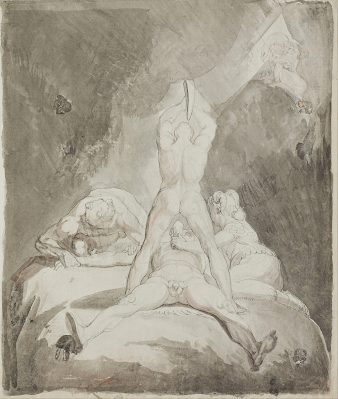
      Hephaestus, Bia, and Crato Securing Prometheus on Mount Caucasus by Henry Fuseli, from the Google Art Project.


      • She is Zeus' winged companion, and she represents the fury and might of his vengeful word. 


      Goddess Bia In Greek Mythology And The Olympian Pantheon.


      Sister to Nike, Kratos, and Zelus, Bia was the Titan Pallas and Oceanid Styx's child.


      Siblings Of Goddess Bia:


      Giant Pallas and Styx were the parents of 
      1. Scylla, 
      2. Vis (Force)(Bia), 
      3. Invidia (Jealousy)(Zelos), 
      4. Potestas (Power)(Kratos), and 
      5. Victoria (Victory) (Nike).


      Zeus remained at Bia's side constantly, along with her siblings. 


      They earned this honor by standing by him and their mother throughout the Titan War. 

      In the Greek play Prometheus Bound, credited to Aeschylus, when Hephaestus is forced by the gods to bound Prometheus after he was discovered stealing fire and giving the gift to humanity, Bia is one of the characters given names. 

      She does not talk, despite the fact that she appears beside her brother Kratos.


      Goddess Bia Aids Zeus


      Bia and her siblings aided Zeus in his battle with the Titans along with their mother. 


      The Titanomachy, as it was known, was a ten-year conflict that ended with the triumph of the Olympian gods. 

      The four siblings gained Zeus' admiration and continued to be his closest friends as a result of their valiant acts throughout the conflict. 

      They were virtually constantly at his side while he sat on his throne in Mount Olympus, and their job was to carry out his instructions whenever he needed a show of might.


      And Styx, the Okeanos (Oceanus) daughter, married Pallas and gave birth to Zelos (Zelus, Emulation) and Nike (Victory), a trim-ankled child, within the home. 


      She also gave birth to two magnificent children, Kratos (Cratus, Strength) and Bia (Force). 

      These people always live with Zeus the loud-thunderer and have no other home, residence, or road except the one that God directs them along. 

      Because on the day the Olympian Lightener summoned all the deathless gods to great Olympos (Olympus) and declared that whoever among the gods would fight with him against the Titanes, he would not cast him out from his rights, but each should have the office which he had previously among the deathless gods, Styx, the deathless daughter of Okeanos, had planned as such. 

      And he stated that the righteous person was the one who lacked office and rights. 


      So, thanks to her loving father's cunning, the immortal Styx and her offspring arrived first at Olympos. 


      Zeus honored her and bestowed upon her immense gifts. 

      He also designated her as the recipient of the great oath of the gods and promised her offspring eternal life in his presence. 

      And he totally complied with his pledge to them all.

      Pallas and Styx had Nike, Kratos (Cratus), Zelos (Zelus), and Bia as children. 

      In recognition of Haides and her offspring's assistance in his fight against the Titanes, Zeus established an oath that had to be taken before the rivers of Styx that flowed from a rock in Haides' domain (Titans).


      Waning Prominence Of Goddess Bia.


      Bia is less well-known than her siblings Kratos or Nike, and she often remains mute when she makes an appearance in tales. 


      She does, however, have a crucial part to play in the Prometheus tale. 

      One of the Titans, Prometheus often clashed with Zeus. 

      He finally infuriated Zeus to the point that he made the decision to punish him forever. 

      He gave the order to bind Prometheus to a mountainside in the Caucasus. 

      The duty was given to Bia and her brother Kratos, but only Bia had the strength to use the unbreakable chains to bound Prometheus to the rock. 

      Prometheus would see an eagle consume his liver in front of him every day. 

      He was tortured endlessly as each night his liver would regenerate and the cycle would start again.

      Goddess Bia's Appearance - Aeschylus.


      "[Enter Kratos (Power) and Bia (Force), carrying Prometheus and Hephaistos (Hephaestus) as captives.]


      Kratos (Cratus): To the farthest reaches of the earth, to the Skythian (Scythian) country, a lonely wilderness And now, Hephaistos, it is your responsibility to carry out the instructions given to you by the Father [Zeus]—to tie this delinquent [the Titan Prometheus] with impenetrable chains made of binding adamant. 

      He has stolen and given to mortal beings your own flower, flashing fire, and wellspring of all arts. 

      Such is his transgression, and he is obligated to atone to the gods for it in order to learn to accept Zeus' rule and change his man-loving ways.

      Hephaistos: Kratos (Power) and Bia (Force), the will of Zeus has certainly been carried out, and nothing can now hinder you [i.e., you are now free from the assigned mission]. 

      However, I lack the courage to tie a similar deity by force in this rocky cleft that is being battered by a harsh winter."

      Goddess Bia's Appearance - Plato.


      "Prometheus [who thought to steal fire from heaven for man] could not make so free as to enter the citadel which is the dwelling-place of Zeus, and furthermore the guards of Zeus [i.e. Kratos (Cratus) and Bia] were terrible: but he entered unobserved the building shared by Athena and Hephaistos (Hephaestus) for the pursuit of their arts, and stealing Hephaistos's fiery art.


      Goddess Bia's Appearance - Pausanias.


      "There is a sanctuary of Ananke (Necessity) and Bia (Force) on the Acropolis of Korinthos (Corinth), into which it is not usual to enter."


      Goddess Bia's Appearance - Plutarch.


      "By traveling about to the islands and attempting to extort money from them, he (the Athenian politician Themistokles, also known as Themistocles) made himself unpleasant to the allies as well. 


      For instance, Herodotos claims that when he demanded money from the Andrians, they responded by telling him that they already had two powerful gods, Penia (Penury) and Aporia (Powerlessness), who prevented them from giving him money. 

      He claimed that he had come escorting two gods, Peitho (Persuasion) and Bia (Compulsion), and that they had responded in kind." 

      [Note: In the original text of Herodotus, Aporia is changed to Amekhania (helplessness) and Bia is changed to Ananke (necessity)].


      References And Further Reading:


      • Burton, D.I.A.N.A., 2011. Nike, Dike and Zeus at Olympia. McWilliam, Puttock, and Stevenson, 2011, pp.51-60.
      • Fineberg, S., 1986. The Unshod Maidens at Prometheus 135. The American Journal of Philology, 107(1), pp.95-98.
      • Lye, S., 2009. THE GODDESS STYX AND THE MAPPING OF WORLD ORDER IN HESIOD'S" THEOGONY". Revue de philosophie ancienne, 27(2), pp.3-31.
      • Chalk, H.H., 1962. Arete and Bia in Euripides' Herakles. The Journal of Hellenic Studies, 82, pp.7-18.
      • Benardete, S., 1964. The crimes and arts of Prometheus. Rheinisches Museum für Philologie, 107(2. H), pp.126-139.
      • Lloyd-Jones, H., 1956. Zeus in Aeschylus1. The Journal of Hellenic Studies, 76, pp.55-67.
      • Kirby, J.T., 1990. The" Great Triangle" in early Greek rhetoric and poetics. Rhetorica, 8(3), pp.213-228.
      • Bobonich, C., 1991. Persuasion, compulsion and freedom in Plato's Laws. The Classical Quarterly, 41(2), pp.365-388.
      • Lloyd-Jones, H., 1956. Zeus in Aeschylus1. The Journal of Hellenic Studies, 76, pp.55-67.
      • Kirby, J.T., The “Great Triangle" in Early Greek Rhetoric and.
      • Bot, C., 2021. Peitho, Dolos, and Bia in Three Late Euripidean Tragedies.
      • Marsh, C., 2015. The Strange Case of the Goddess Peitho: Classical Antecedents of Public Relations’ Ambivalence Toward Persuasion. Journal of Public Relations Research, 27(3), pp.229-243.


      Goddess Akonadi


        Akonadi is the goddess of justice in West Africa. 


        • She is the Oracle, the teller of both visible and invisible facts. 
        • She utilizes her second sight to bring justice to all circumstances.
        • She is especially sympathetic to women's problems.


        Goddess Akonadi is a mythological figure in both African and Ghanaian mythology. 


        • As the goddess of justice, Akonadi or Akonedi, is revered and worshipped by the people of this region. 
        • She is also known as Akonandi, the goddess of prophesies in Ghana and West Africa.
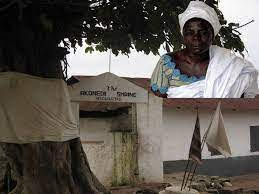
        • She is particularly well-known in the Accra region, where she has a predictions temple and shrine dedicated to Her. 
        • She is revered for Her unique attribute of being both a goddess of justice and a woman's defender. 


        What is the Goddess Akonadi legend?


        Legend - Her function as a goddess of justice who protects mothers and children is shown by the following story: 


        Three brothers came to the Akonadi Shrine seeking counsel after their families experienced a series of fatalities. 

        Because their grandma was collaborating with a gang of criminals, I instructed them to go to their grandmother's home, where they would discover stolen items. 

        The boys returned to the home and discovered a metal box with valuables under their grandmother's bed. 

        They presented the goddess with the chest. 


        There will be no further fatalities if the stolen objects are no longer in their possession. 

        Soon later, two men approached the goddess and informed her that a chest containing treasures had been taken from their mother's land, and asked if she knew who the criminals were. 

        Her priestess replied that the box was at the shrine and that, although they were welcome to take it, they should leave it so that it may be used for charity for needy women and children. 

        The guys decided to leave the treasure box with the goddess to distribute to the poor, knowing how much agony it had caused. 


        Many Contemporary West Africans venerate her as a Ghanaian Oracular deity. 


        She has a well-known oracular shrine in Accra that is associated with this legend, practice and belief system.


        • Contemporary Western scholars have also discovered a relationship between the particular Goddess Akonadi spirit cult in the southern Ghanaian town of Akonedi and the African diaspora communities in the United States.
        • There have also been instances of cultural appropriation and a strong relationship between Afrocentric American devotees  of several Churches and the Ghanaian proprietors of the Akonedi shrine near Accra. 


        Scholars have also studied and observed how the Akonedi Shrine priests and priestesses participate in African traditional religion. 


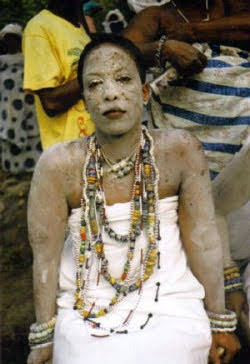
        • The main priestess of Goddess Akonadi presides over the shrine. 
        • She is possessed by the spirit of Goddess Akonedi, who died during childbirth. 
        • She attempts to assist and help individuals and worshippers through her powers derived from the spirit of Goddess Akonadi during the possession ritual. 


        References And Further Reading:


        • Fallon, Kathleen M. “Education and Perceptions of Social Status and Power among Women in Larteh, Ghana.” Africa Today 46, no. 2 (1999): 67–91. http://www.jstor.org/stable/4187268.