Showing posts sorted by relevance for query childbirth. Sort by date Show all posts

Goddess Akhushtal


    Mesoamerican Goddess of childbirth, Akhushtal. 


    • Akhushtal is the Mayan  god that oversees the whole process of childbirth, from conception to delivery. 


    Mayan Midwifery And Society. 


    Midwifery is a female-dominated profession that aids women from conception until postpartum care. 


    Akhushtal goddess of midwifery is worshipped in certain Maya tribes, and midwives are said to be allocated their vocation via signs and visions. 


    Ixchel was the name of the pre-Spanish Yucatan deity of the old midwife.

    Childbirth is the Maya's ultimate rite of passage, completing a girl's transformation to womanhood.

    Many women who give birth in remote regions are cared for by midwives who have no official training but are said to have gotten instruction in dreams by the Maya religion. 


    Traditional birth attendants are referred to as comadronas or iyom kexelom, and their work is regarded with respect.


    Maya midwives are in charge of the ajtuj ("pregnant lady") and her unborn child during the pregnancy as well as the week of bed rest after the delivery. 

    Unlike other communities, the Maya believe that they receive a holy calling from God via dreams, allowing them to perform their intended career. 


    The midwife's calling is divine, and she has the ability to speak with the supernatural realm.


    Though midwives are revered for their holy role in society, they sometimes face animosity from their spouses and children since they must spend so much time away from them in order to do their duties. 

    Midwives are required to refrain from sexual activity, which might cause conflict with their spouses.


    Midwives are said to acquire their calling from God via a sequence of dreams in Maya civilization. 


    Visions of Saint Anne, the patron saint of all midwives, are said to often carry subtle signals that a woman is destined to become a midwife. 

    Women, according to the Mayan faith, discover little artifacts along routes that represent symbols and objects associated to midwifery, in addition to getting dreams and visions. 


    Small unique stones in the form of faces, shells, marbles, and shattered parts of prehistoric figures are common. 

    In Maya religion, stones are typically ascribed holy qualities and are said to be sent from the spiritual realm as a symbol of one's vocation to midwifery. 

    Some things placed in a midwife's path are said to be the instruments they require to execute aspects of the delivery process, such as a penknife for cutting the umbilical cord. 


    Women often contact shamans, who explain their calling to them, and if they accept their calling as midwives, they are said to have a series of dreams and visions about the birthing rituals they must follow. 


    They may also be called to mountains or other holy sites, where they may meet supernatural entities, in addition to these specific things and the repeated dreams. 

    Mayans think that women who disregard their calling are more likely to get sick, and that if physicians are unable to diagnose their diseases, they may even die. 

    They also think that supernatural creatures tell them in their visions that they will get presents from the families of the children they deliver, and that they must not be greedy since many will offer what they have, and that they must take it with a good heart.


    Midwives are in charge of pregnant women throughout their pregnancies with no official training or education other than what they think they acquire through their dreams. 


    These dreams are said to include visions from the spirits on how to correctly inspect women, massage them, feel for the position of the fetus, measure dilation, cut the umbilical chord, pray, and prophesy a child's destiny based on the marks on their umbilical cord. 

    Midwives think that by seeing these visions, they will be able to recognize difficulties that might jeopardize a healthy birth and will be able to take women to local clinics and hospitals. 

    Midwives are called during the third to fifth month of pregnancy and provide prenatal care at monthly intervals until the last month of pregnancy, when they begin to visit weekly. 

    Midwives offer prenatal care that includes massages, exams, attending the delivery, and caring for both the new mother and infant during the week of bed rest.


    Many things, according to the Mayans, may be interpreted when a child is born. 


    The "Sacred calendar," or Maya calendar for divination, is said to forecast a child's destiny since certain days are more favorable than others. 

    In Maya civilization, the calendar is crucial for understanding and determining the destiny of children. 


    Mayans, on the other hand, believe that midwives may predict a child's life based on the marks on the umbilical cord and the amniotic sac. 

    They think that the sex, number, and spacing of subsequent births may be predicted based on the marks of the firstborn. 

    The most essential marks are those of a future shaman (worms or flies gripped in a newborn's hand), a midwife (white mantle over the head, which originates from the amniotic membrane), and a baby who will imperil future siblings' life (born with a double whorl in its crown). 

    The midwife is the first person to view the newborn, and before a mother can connect with her kid, the midwife is supposed to carefully read the child's symptoms, and she alone will determine what career the child will pursue. 

    She must then carefully remove, dry, and conserve the signs, which the maternal grandma will maintain. 


    Praying is regarded crucial in the delivery of a child, and the midwife starts praying as soon as she is notified about the birth. 


    Before entering the home and touching the pregnant lady, she is also supposed to pray. 

    She must also pray to each of the room's four corners, which are thought to be guarded by unseen guardians. 

    When subsequent children die, one ritual must be completed because it is thought that the first-born child (sometimes born with a double whorl on the umbilical cord) pursues and consumes the newborn's soul. 


    The midwife wraps a live chicken in a cloth and travels the room with the eldest kid praying to each of the four corners in an attempt to preserve the newborn's life. 


    On the back of the oldest kid, the chicken is battered to death (behind closed doors and away from the newborn). 

    She then cooks a chicken soup, which the oldest kid is obliged to consume in its whole, even if it takes many meals. 

    The midwife must execute her last cleaning rites at the conclusion of the bed rest week, indicating the end of her duties. 


    The infant is washed, and a fresh dress is put on the naval, as well as the hammock in which the baby will sleep. 

    She requests that the infant be kept safe. 

    In a semi-public hair washing ritual, the mother is also purified. 

    Before she goes, the last ritual she must undertake is sweeping and cleaning the room. 

    She then says a last prayer, thanking the spirits for a safe delivery.


    The Birthing Figure at Dumbarton Oaks is spectacular, dramatic, and completely unique. 


    The anguish and bliss of labor are perfectly captured in this Aztec-style sculpture of a lady giving birth. 

    It has long wowed spectators, including artists, researchers, and notable collectors of Pre-Columbian art, thanks to its excellent carving in a hard, speckled stone called aplite. 

    Its distinctive iconography and carving have provoked a heated discussion about its origins and validity.
    The sculpture has been related to a portrayal of the goddess Tlazolteotl in the process of childbirth found in the Codex Borbonicus, which was first cited in an 1899 book by the French anthropologist E.T.  Hamy. 

    This goddess, whose name means "eating of dirt," was linked to sexuality and the atonement of crimes. 


    She wears a big cotton headpiece with crescent-shaped decorations on her nose and/or garments in the codices. 

    Her mouth is filthy and stained.

    The Birthing Figure sculpture is unique in that it lacks Tlazolteotl's typical characteristics. 

    Unlike any other Aztec god sculpture, this one is nude and unadorned. 

    Scholars have noted other unique aspects, such as the figure's crisp edges and immaculately straight hair, since the 1960s. 

    Some have speculated that the sculpture was not done by Aztec carvers. 

    A scanning electron microscope (SEM) study of the item in 2002 revealed that most of the carving was done using contemporary rotary tools. 


    The Dumbarton Oaks Birthing Figure was carved – or maybe re-carved – in the nineteenth century.


    The history of the sculpture is interesting. 

    It travelled through various members of France's Academy of Sciences around the turn of the twentieth century, and was chronicled by anthropologist E.T. 

    Hamy, who prepared a plaster cast for the Musée d'Ethnographie du Trocadéro. 

    By the early 1930s, the figure had passed through the hands of Parisian art dealer Charles Ratton, who sold it to Joseph Brummer, a New York-based art dealer and collector. 

    Until his death in 1947, Brummer kept the artwork in his personal collection. 

    The Birthing Figure was purchased by Robert Woods Bliss, the creator of Dumbarton Oaks, at that time. 

    He exhibited it in the National Gallery of Art in Washington, D.C., and then at the Dumbarton Oaks Research Library and Collection in Washington, D.C., beginning in 1963. 

    Many books, exhibition catalogues, and other media have included The Birthing Figure. 


    It's also sparked a slew of creative initiatives. 

    Man Ray, a surrealist photographer, made a four-part photomontage (about 1932) to emphasize the piece's dynamic lines. 

    The sculpture was used in a mural by Diego Rivera depicting the history of Mexican medicine (1953-54). 

    Eduardo Paolozzi created a huge papier mâché replica, which he put in a traveling exhibition of his work (1988). 

    The Golden Idol in Steven Spielberg's Indiana Jones and the Raiders of the Lost Ark (1981) is perhaps the most renowned reincarnation of the statue. 

    A search on the internet uncovers a plethora of other creative works inspired by Aztec-style sculpture.


    References And Further Reading:


    • Evans, Susan Toby 2010 Ancient Mexican Art at Dumbarton Oaks. Pre-Columbian Art at Dumbarton Oaks, No. 3. Dumbarton Oaks Research Library and Collection, Washington, D.C.
    • Grossman, Wendy A. 2008 Man Ray’s Lost and Found Photographs: Arts of the Americas in Context. Journal of Surrealism and the Americas 2 (1):114-139
    • Hamy, E. T. 1899 Commentaire Explicatif. In Codex Borbonicus; Manuscrit Mexicain De La Bibliothèque Du Palais Bourbon (Livre Divinatoire Et Rituel Figuré), pp. 1-24. E. Leroux, Paris
    • Hamy, E. T. 1906 Note Sur Une Statuette Mexicaine. Journal de la Société des Américanistes de Paris III (1):1-5.
    • Walsh, Jane McLaren 2008 The Dumbarton Oaks Tlazolteotl: Getting beneath the Surface. Journal de la Société des Américanistes 94 (1):7-43.


    Goddess Lucina


    Lucina: The goddess of light in Roman mythology.

    Lucina is a goddess of childbirth who helps babies into the realm of light.

    She is an element of Juno who protects women during childbirth.


    ~Kiran Atma


    Who Is Goddess Chihuacoatl?


    Chihuacoatl, also known as Cihuacoatl is the Goddess of childbirth in Aztec mythology. 


    Chihucoatl is the patroness of Aztec matrons and is often depicted as a large snake. 


    She is in charge of labor, birth, midwives, and mothers who have died during childbirth. 

    Chihucoatl, whose name means "Snake Woman," is revered as an Earth Mother. 

    Her scream indicated a period of conflict or sorrow, and she assisted in the creation of the human race. 

    Chihucoatl is portrayed as a youthful lady or a skeleton-faced hag.


    Goddess Candelifera


    Candelifera is a Roman goddess associated with childbirth. 


    Candelifera is the Candle Bearer, assisting children in their transition from the womb to the outside world. 


    • A candle is lighted during labor and delivery to ask for her help and protection.


    Goddess Artemis


    Royalty-free Artemis photos free download | Pxfuel


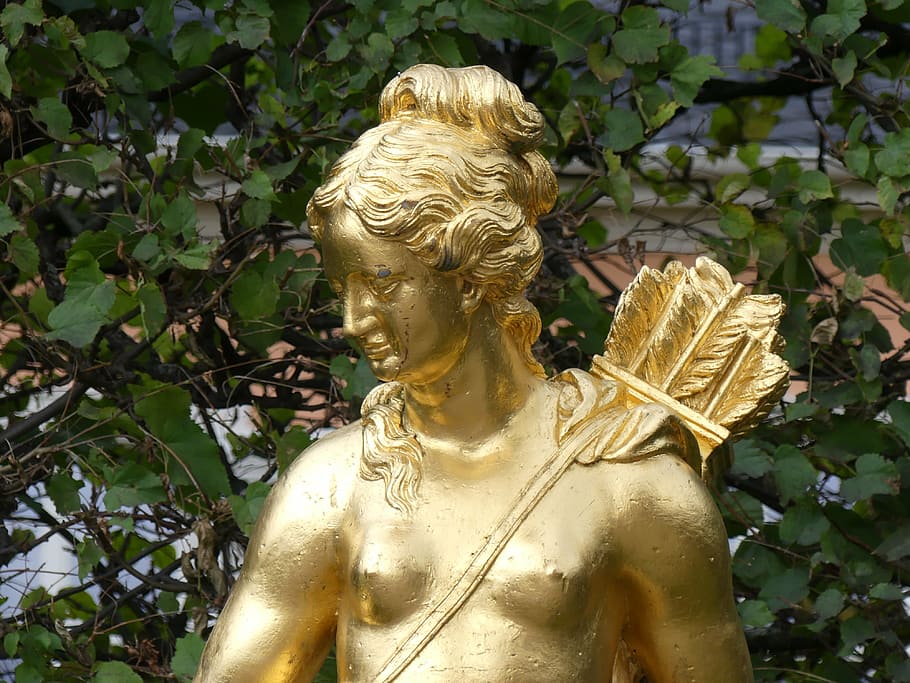
    Artemis is the Greek goddess of hunting. 


    • Artemis, the Olympian goddess of the wilderness and ruler of woods, woodlands, and wild animals, was created by Zeus. 
    • Artemis, often known as the goddess of childbirth, is the guardian of young girls until they reach marriageable age. 
    • She is the embodiment of independence and self-reliance, as well as the protector of the vulnerable and mistreated, as the Virgin Huntress. 
    • Artemis is typically portrayed as a young lady with a bow and arrow in her hands. Her holy animals include deer, bears, and cypress trees.

    Goddess Carmenta


    Carmenta is a Roman goddess who is associated with childbirth. 


    Carmenta, like Antevorte and Postverta, is a Camenae goddess who governs over birth and prophesy. 


    • Her divination abilities are limited to the present, and she prophesies in poetry and song. 
    • She rules over poetry and pools of water, and her name means "magickal spell," "oracle," or "charm." Carmenta is a goddess of contraception who is summoned to prevent undesired births. 
    • Her devotion is believed to precede the foundation of Rome and is mainly devoted to women.


    Goddess Hecate


    Hecate is a Greek witch deity.

    Hecate is the Crone aspect of the Triple Goddess, and along with Persephone and Demeter, she forms the triad; yet, she also seems to have three faces.

    She is known as the "Queen of Ghosts" because she holds control over heaven, earth, and the underworld.

    She protects spirits from injury and mischief in her role as the spiritworld's protector.

    Hecate is most typically connected with the crossroads, a site of spiritual insight and dark intuitive witchcraft.

    She was once a goddess of the woods and childbirth.

    Hecate, the supreme sorceress and diviner, teaches her followers the Witch's way and leads the seeker to the unconscious mind's depths.


    ~Kiran Atma


    Goddess Wadjet


    Wadjet: Protective Egyptian goddess.

    Wadjet is a goddess of childbirth who protects royal and wealthy children.

    Lower Egypt is protected by her, and she imparts her expertise and competence to the reigning pharaoh.

    Along with Nekhebet, she is one of Pharaoh's two Ladies.

    On December 25th, Wadjet is commemorated with chants and songs.

    Her totem is a cobra.


    ~Kiran Atma

    Moon Goddess Or Goddess On The Moon?


    The moon is often characterized as the major emblem of the feminine, connected with emotion, changefulness, and fluidity, in contrast to the widespread belief that the sun is a male emblem. Moon goddesses are therefore described by scholars in terms of purportedly archetypal feminine qualities, which generally carry the imprint of human women's societal expectations. Moon goddesses who are docile, reliant, and changeable, on the other hand, are uncommon in global religion. 


    The list of alleged "moon goddesses" is frequently deceiving. 

    Although numerous goddesses of the moon have been created throughout history, academic bias extends the list to include goddesses whose initial meaning was far broader than the lunar orb. Diana, the Roman goddess of the open sky, was renamed Artemis, the Greek goddess of the moon, as a result of her affiliation with Artemis. 

    Automatic connections of cosmic goddesses with the moon, such as Carthaginian Tanit, have erroneously confined the realm of such divinities. Juno was also known as the Lunar Goddess since her feasts were held during specific moon phases, although her domain of interest was far larger than the night. 

    As a result, the phrase "moon goddess" may both correctly describe a deity and also denote a goddess whose jurisdiction has been reduced to meet scholarly views. 


    When it is assumed that the moon always had a restricted, reflecting marriage connection with a masculine sun, academic misunderstanding might emerge. 

    While a female sun and a male sun can be characterized as husband and wife (Mexican Coatlicue, North American Hanwi), they may also be characterized as brother and sister (Eskimo Malina, African Mweel). Other civilizations referred to the sun and moon as sisters (see Bomong in India; Hae-Soon in Korea). 

    The Southeast Asian Buan, who sought to deceive the sun and was relentlessly followed by him as a result, might be considered as adversaries. 

    Finally, we occasionally come across tales in which the moon was once a sun who was converted into the moon or willingly decreased her light, such as Native American P'áh-hlee-oh who gave up one of her beautiful eyes so that the earth may rest. 

    The concept of a global link and antagonism between the sun/male/husband and the moon/female/wife is not culturally viable.  Where the moon is revered as a goddess, she does not have to be passive or emotional. 

    Hina, a Polynesian lady, fled to the moon because she found her family to be too demanding and abandoned them as a married lady. 

    Many significant lunar divinities were ruthless and self-sufficient, even deadly to mankind. Artemis, the Greek archer, protected pregnant animals from hunters who could breach her laws against killing them, and she sentenced to death any male who insulted her purity or jeopardized the virginity of her Nymphs. 

    Coatlicue, an Aztec princess, wore a snake-skin skirt and a necklace made of human skulls to symbolize her power over death. Hecate, the goddess of magical abilities, was worshipped by wild dogs in Greek mythology. 


    Many civilizations have a relationship between the moon goddess and animals

    Sometimes, as with Artemis, the animals were wild, frequently herd animals in need of predator protection.  

    In other circumstances, the animals were friendly, as as with African Abuk, the sheep protector; these people said that the moon resembled one of Abuk's herd. 

    Cattle were also connected with the moon, which was shown as a beautiful white cow (Irish Bó Finne) or, on rare occasions, a bull (Greek Europa). 


    Many lunar creatures are prey rather than predators, and they live in groups led by a matriarch. 

    As a result, although being depicted as virginal, the goddess acts as a ‘‘mother" to the flocks she protects.  

    However, there are a variety of animal connotations, such as Chinese Ch'ang O, who was represented as a toad sitting on the moon like a lily paddy. Water is associated with several moon goddesses, particularly the ocean deities. Ancient peoples were well aware of the moon's relation to the tides of the sea. Early on, it was determined that women's monthly bleeding was linked to the moon cycle. 

    The African diaspora mermaid Ymoja is pictured swimming in the ocean. n. Moon goddesses are ironically linked to childbirth, with the moon represented as a cosmic midwife. 


    Some goddesses, like Artemis, are both virginal and linked to midwives. 

    The fact that the moon's form varies every month may have heightened its link to pregnancy, since the luminary gets rounder like a pregnant belly each month. 

    In Bali, this pregnancy is connected with abundant vegetative growth, since the goddess Dewi Shri is shown as pregnant with rice during full moon (see India). 

    The moon's monthly shape-shifting made it an appropriate emblem for magicians and witches who could shape-shift at will (Greek Hecate, Mexican Tlazoltéotl, Celtic Arianhro).  The transformation was sometimes attributed to an attack on the deity (Mexican Coyolxauhqu). 

    However, the moon's changing appearance was portrayed as exemplifying the moon goddess's capacity to transform earthly chaos into order and measurement (North American Meni). 


    ~Kiran Atma


    You may also want to read more about Goddess Symbolism here.


    Goddess Ixtab


    Mayan goddess of suicide, Ixtab.

    Suicide was an accepted way to die in Mayan civilization, because it would lead to the eternal paradise.

    Ixtab is the custodian of the souls of warriors and women who died in childbirth, as well as those who murdered themselves by hanging.

    She is the one who leads the souls to paradise and looks after them.

    Ixtab's seductress duty required her to mate with young, mortal males who, after tasting her, would become mad and yearn for her devotion for the rest of their lives.

    With a rope around her neck, she is shown as a dead and rotting lady.


    ~Kiran Atma


    Goddess Ninti


    Ninti (Sumerian for "life") is a Sumerian goddess of life.

    Ninti is a goddess of childbirth and healing.

    Her name means "Lady of the Rib" or "Lady of Life" in English.

    She fashions children' bones from their mothers' ribs, which were formerly regarded as the "bones of life" in ancient Sumer.

    Ninti treats shattered bones and disorders affecting the skeleton.


    ~Kiran Atma


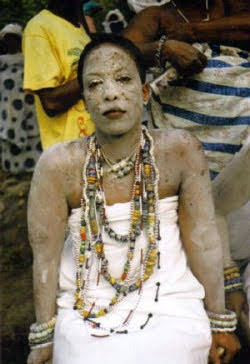
    Goddess Akonadi


      Akonadi is the goddess of justice in West Africa. 


      • She is the Oracle, the teller of both visible and invisible facts. 
      • She utilizes her second sight to bring justice to all circumstances.
      • She is especially sympathetic to women's problems.


      Goddess Akonadi is a mythological figure in both African and Ghanaian mythology. 


      • As the goddess of justice, Akonadi or Akonedi, is revered and worshipped by the people of this region. 
      • She is also known as Akonandi, the goddess of prophesies in Ghana and West Africa.
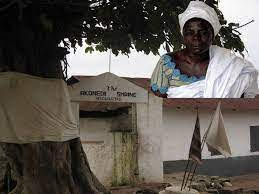
      • She is particularly well-known in the Accra region, where she has a predictions temple and shrine dedicated to Her. 
      • She is revered for Her unique attribute of being both a goddess of justice and a woman's defender. 


      What is the Goddess Akonadi legend?


      Legend - Her function as a goddess of justice who protects mothers and children is shown by the following story: 


      Three brothers came to the Akonadi Shrine seeking counsel after their families experienced a series of fatalities. 

      Because their grandma was collaborating with a gang of criminals, I instructed them to go to their grandmother's home, where they would discover stolen items. 

      The boys returned to the home and discovered a metal box with valuables under their grandmother's bed. 

      They presented the goddess with the chest. 


      There will be no further fatalities if the stolen objects are no longer in their possession. 

      Soon later, two men approached the goddess and informed her that a chest containing treasures had been taken from their mother's land, and asked if she knew who the criminals were. 

      Her priestess replied that the box was at the shrine and that, although they were welcome to take it, they should leave it so that it may be used for charity for needy women and children. 

      The guys decided to leave the treasure box with the goddess to distribute to the poor, knowing how much agony it had caused. 


      Many Contemporary West Africans venerate her as a Ghanaian Oracular deity. 


      She has a well-known oracular shrine in Accra that is associated with this legend, practice and belief system.


      • Contemporary Western scholars have also discovered a relationship between the particular Goddess Akonadi spirit cult in the southern Ghanaian town of Akonedi and the African diaspora communities in the United States.
      • There have also been instances of cultural appropriation and a strong relationship between Afrocentric American devotees  of several Churches and the Ghanaian proprietors of the Akonedi shrine near Accra. 


      Scholars have also studied and observed how the Akonedi Shrine priests and priestesses participate in African traditional religion. 


      • The main priestess of Goddess Akonadi presides over the shrine
      • She is possessed by the spirit of Goddess Akonedi, who died during childbirth. 
      • She attempts to assist and help individuals and worshippers through her powers derived from the spirit of Goddess Akonadi during the possession ritual. 


      References And Further Reading:


      • Fallon, Kathleen M. “Education and Perceptions of Social Status and Power among Women in Larteh, Ghana.” Africa Today 46, no. 2 (1999): 67–91. http://www.jstor.org/stable/4187268.