Showing posts sorted by relevance for query flowers. Sort by date Show all posts

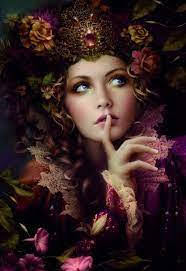
Goddess Chasca


    Chasca is the goddess of light in Peruvian mythology. 

    Chasca was revered by the Peruvian Inca as the morning and setting sun. 


    She protects virgins and young girls as the goddess of dawn and twilight. 

    She is regarded as the sun's servant, and it is via her light that flowers and plants may grow and flourish.


    Latest Release - The Hindu Pantheon Series by Kiran Atma

    Chasca, The Long-Haired Star.


    Chasca or Ch'aska, also known as "The Long-Haired Star," was a goddess of Venus and the planets of the dawn and dusk. 


    She is the young girls' and virgins' protector. 

    She is connected to rebirth and spring. 

    Chasca is a central figure in the Incan pantheon. 

    The Incans present her with floral offerings. 

    The planet Venus is ascribed to her. 

    The emblems for Goddess Chasca are the Sun, the Fire, and the Flora. 


    She is in charge of the early morning and late afternoon hours of the day. 

    The motifs of Chasca include the sun, fire, love, and divination. 

    The sun, fire, and flowers are some of her emblems. 

    The dawn and twilight, the most serene features of Nature, were created by this Goddess, according to Incan mythology. 


    The Incan goddess of dawn.


    The Incas revered Chasca as a lovely goddess who was connected to dawn and dusk. 


    She is symbolized by flowers, fire, and the sun. 

    Because of their strong collaboration with Inti, the sun deity, Chasca or Ch'aska is also connected to love. 

    Together, they made it possible for Chasca to extract sprouts from the ground and aid in the growth and blooming of flowers. 

    The Incas of antiquity thought she would speak to them via the weather, particularly the clouds. 


    Chasca was said to aid in regeneration and change. 


    The Incans would honor the beauty that Inti and Chasca had produced at the Peruvian Incan Festival of the Sun. 


    They would rejoice in the sun's radiance and the flowering of plants and flowers. 

    Giving gifts to the goddess Chasca and dancing the night away in front of a fire pit were both customary during the celebration. 

    In order to banish ill luck and bring about change for the future, it was also believed that the people would burn old objects in the fire, such as clothes. 


    Goddess Chasca Invocation.


    The goddess Chasca was invoked by the Incans to help transform negative energy into good energy. 


    Just glance to the heavens to invoke Chasca. 

    Look up at the sky and ask her a question. 

    You could come upon the precise solution you need! Goddess of the dawn and twilight, she is shown as a lovely young woman with waves in her hair. 


    Chasca is the Sun God Inti's servant and is connected to Venus. 


    She guards the young maidens as well. 

    She is, in other words, Venus. 


    In addition, she is a pretty young woman and the guardian of virgins, much like the Roman Venus. 

    We speculate that she prefers an especially vivid hue of pink as Chasca was revered as the goddess of dawn and twilight by the Inca people of Peru. 


    She was revered as the serene facets of the sun at dawn and dusk. 


    She is referred to as the lovely girl with waves, and as the sun's servant, it is because of her light that flowers and vegetation may develop and flourish. 


    She was credited for controlling the weather and guarding virgins and young girls in "incan" mythology. 

    Her other name, "the long-haired star (venus)," refers to the connection between "chasca" and the planet "venus". 

    According to folklore, she interacts with her people via the clouds and, as the mistress of the dawn, the dew she throws onto the earth. 

    She was the creator of the flowers, using her light to inspire blossoming and pull sprouts from the ground. 

    She has no totem animals; instead, she is married to the sun deity "Inti."


    ~Kiran Atma


    References And Further Reading


    • Littleton, C.S. ed., 2005. Gods, goddesses, and mythology (Vol. 1). Marshall Cavendish.
    • Farrar, J. and Farrar, S., 2012. The witches' goddess. David & Charles.
    • Lurker, M., 2015. A Dictionary of Gods and Goddesses, Devils and Demons. Routledge.
    • Auset, P.B., 2009. The goddess guide: Exploring the attributes and correspondences of the divine feminine. Llewellyn Worldwide.
    • Reddy, F., 2012. Morning Stars, Evening Stars: Venus and Mercury. In Celestial Delights (pp. 51-93). Springer, New York, NY.
    • Deeds, E., 2008. DE LAS COSTUMBRES ANTIGUAS DE LOS NATURALES DEL PIRU. Guide to Documentary Sources for Andean Studies, 1530-1900, 2, p.170.
    • Franklin, A., 2002. Midsummer: Magical Celebrations of the Summer Solstice (Vol. 7). Llewellyn Worldwide.
    • McElroy, D.R., 2020. Superstitions: A Handbook of Folklore, Myths, and Legends from Around the World. Wellfleet Press.
    • Hall, L.B., 2021. Chapter Six The Andean Virgin. In Mary, Mother and Warrior (pp. 137-168). University of Texas Press.
    • Siemens, W.L., 1975. Heilsgeschichte and the Structure of Tres tristes tigres. Kentucky Romance Quarterly, 22(1), pp.77-90.
    • Stahl, F.A., 1920. In the Land of the Incas. Pacific Press Publishing Association.


    Goddesses Of Vegetation


    In some areas, vegetation is connected with a male god. 

    In Southeast Europe, for in stance, the mountain goddess Cybele took the tree god Attis for her lover. 

    In spring rit uals in the eastern Mediterranean, women planted gardens of Adonis, dedicated to the young lover of Greek Aphrodite who was killed in his prime, as the seedlings of the Adonis gardens were to die after a brief period of growth. 

    The connection of male divinity with vegetation has been described as the background for the image of the Christian savior Christ, meeting his death upon a dead tree. 

    Most cultures have connected plants with goddesses. 

    Such goddesses were typically associated with agriculture and represented the abundant food produced by the fertile fields. 

    Such vegetation goddesses can be forms of the earth mother (see above), for goddesses embodied in the fertile soil and those found in plants that spring from that soil can be difficult to distinguish, if indeed such a distinction was made by the god desss followers. 

    Goddesses of vegetation can be embodied in plants (African Abuk, who was a bean; Southeast Asian Hainuwele, who turned into a date-palm) or may tend them as gardeners (Hawaiian Hiiaka, African Mbokomu, South American Nugkui). 

    A cultures vegetation goddess reveals its mainstay foods, for which reason many goddesses are connected with grains rather than, for instance, leafy greens that do not store well and are available for only part of the year. 

    In the eastern Mediterranean, Ninlil and her mother Ninshebargunu ruled barley and other nourishing seeds. 

    In Rome, we find Ceres, from whose name we derive a term for grains. 

    Similarly, Greek Demeter and Slavic Z˘ emyna are connected with wheat and rye and barley, called ‘‘corn in old texts that use the term ‘‘maize for the yellow grain from the Americas. 

    In India and southeast Asia, goddesses were associated with the mainstay of the daily meal, rice, most famously embodied in the Hindu goddess of wealth, Laks˛mı, who appears in Bali and nearby islands as the primary goddess Dewi Shri. 

    A similar goddess was Basmoti, whose name we still use for a type of rice; in central India, Astangi Devı brought humans not only rice but bamboo, with its edible shoots. 

    In Japan, the rice goddess was the fox-woman Inari, a divinity who is still very popular today. 

    In central and north America, the goddess of agricultural plenty was connected with maize or corn; Cherokee Selu and Pawnee Uti Hiata are among the ‘‘corn moth ers of the Americas. 

    In South America, where the potato was a mainstay of life, the goddess of abundance was Pachamama. 

    In the Pacific, the goddess Pani was associ ated with yams, an important food plant. 

    Goddesses of vegetation could be divinities of birth as well, not only because farm ing reproduces plants but because sufficient food is necessary for women to become pregnant. 

    In Babylonia, the birth goddess Bau derives her name from a term meaning ‘‘giver of vegetables (see Eastern Mediterranean). 

    In Thailand, the primary goddess is Mae Phosop, deity of rice who appears as a pregnant woman when the grains swell to maturity and who gives birth to the new crops (see India). 

    In Australia, Imberom bera walked around creating life by giving birth and forming plants (see Mutjingga). 

    Not only were vegetation goddesses associated with birth; they were also connected with death. 

    In the cycle of the crops, farmers saw their own lives: flourishing in youth, reaching productive adulthood, finally dying. 

    This identification was reflected in myth. 

    African Asase, who claimed the dead, was primarily a goddess of vegetation. 

    Nambi, also from Africa, stole seeds to bring food plants to earth, but unwittingly opened the way for death to descend from the heavens. 

    In Egypt, the tree-living death goddess Ament offered food to the newly dead, the tasting of which kept them from returning to life. 

    Yet even in death, vegetation goddesses promise new life. 

    Egyptian Hekt was embodied in grain, which seems to ‘‘die before it sprouts. 

    Eating the fruit of Chinese Xiwang Mus magical peach tree transformed the deceased into an immortal. 

    Flowers and fruit both serve as goddess images. 

    Often the goddesses are depicted, respectively, as younger and older, with a nubile goddess envisioned as a deity of flow ers while a more mature goddess is the resulting fruit. 

    Among important flower god desses we find Romes Flora, divinity of prostitutes and sexuality; Bloduewedd in Wales (see Celtic), a heroine made completely of flowers; Greek Persephone (Roman Proserpina), a maiden goddess raped while picking crocuses; and the Aztec Xochi quetzel, the deity embodied in the marigold. 

    In India, the Apsaras were bedecked with flower garlands that, if offered to a human, indicated willingness to engage in intercourse. 

    In Russia (see Slavic), a young woman embodying Berehinia wore a crown of red flowers to represent the goddess. 

    As flowers are the genitalia of plants, they often symbolize the goddesss female organs. 

    The fruit that results from pollination of flowers becomes the symbol of mature god desses. 

    The most familiar is the apple associated withEve, ancestral mother of humanity (see Eastern Mediterranean). 

    The peach offered by Chinese Xiwang Mu brought immortality to the eater. 

    A pomegranate represented Hera, Greek goddess of womans power. 

    The apple was connected with Lithuanian Saule˙ (see Baltic). 

    Among goddesses of fruit we find several connected to intoxication, for sugary fruit naturally ferments into wine. 

    Sumerian Nikasi was embodied in strong grapevines (see Eastern Mediterranean). 

    African O ya was connected with palm wine; Greek Oeno, with wine from grapes. 

    The tree provided an image of the goddess as provider of food, with fruit trees espe cially regarded as feminine. 

    In Scandinavia, where fruit varieties were limited, Idunn was associated only with apples, while in Japan, Kono-Hana-Sakuya-Hime and Yaya-Zakura were goddesses of the cherry tree and Rafu-Sen of the plum. 

    Greek Carya ruled the walnut, Irish Buan the hazelnut (see Celtic), Roman Rumina the fig. 

    Even trees that do not bear edible fruit or nuts had goddess associations. 

    Many trees were described as inhabited by feminine spirits like Greek Dryads, tree-living Nymphs who died when their tree died. 

    Similarly, Scandinavians envisioned the for ests of northern Europe as inhabited by Askefruer, ash-tree women. 

    The Greeks con nected goddesses with specific tree species, as with the multiple Heliaces (poplar) and Meliae (ash), as well as the singular Daphne (laurel) and Carya (walnut). 

    Tree cults are attested in Greek religion, including one centered on Helen, who was ritually hung from a tree in ancient times. 

    Such goddesses could appear as ancestral figures; among the Scandinavians, Embla was said to have been the primordial woman, born of an ash tree. 

    Trees were the preeminent image of the Hebrew goddess Asherah, whose image was carved from a wooden plank. 

    The Arabic goddess Uzza was also honored in groves of trees (see Eastern Mediterranean for both). 

    ~ Kiran Atma

    You can learn more about Goddess Symbolism here.


    Goddess Asherah


    The renowned deity of the Middle East, Asherah. Asherah, also known as the Queen of Gods and the Ruler of Heaven, is often portrayed as a curly-haired goddess riding a holy lion while carrying flowers or serpents in her hands. 


    • She was revered throughout ancient Israel as Yahweh's spouse and is believed to have developed into the goddess Shekina, as mentioned throughout the Old Testament. 
    • Asherah, the goddess of the sea, embodies divine knowledge and ultimate femininity. 
    • Her likenesses have been discovered carved onto live trees, on altar poles, and on walking staffs. 
    • The Tree of Life, flowers, and cows are among her emblems.

    Goddess Blodeuwedd


    Welsh goddess of treachery, Blodeuwedd. 


    Blodeuwedd, or "Flower Face," is the Triple Goddess's Maiden aspect, together with Arianrhod and Cerridwen, who constitute the triad. 


    • She is the goddess of spring, initiations, and flowers, but she is most remembered for her husband Llew, or Lugh, the sun god's deception, adulterous betrayal, and murder. 
    • She is regarded as the May queen, and her holy marriage to Llew is seen as the blood sacrifice required to keep the Wheel of the Year turning. 


    Blodeuwedd is transformed into an owl as a punishment for her treachery, symbolizing the sensuous maiden's eventual transformation into the wise crone. 


    • For the nine blooming flowers that gave birth to her: primrose, bean, broom, meadowsweet, burdock, nettle, oak, hawthorn, and chestnut, she is regarded a ninefold goddess unto herself. 
    • Blodeuwedd, along with Arianrhod, Branwen, Cerridwen, and Rhiannon, is one of Avalon's five goddesses.


    Goddess Maia


    Maia is the goddess of spring in Greek mythology.

    Maia is the mother of Hermes and the oldest of the Pleiades.

    She is a lonely goddess who dwells alone in a cave and is related with birthing and spring witchcraft.

    She promotes the development of plants and flowers, as well as the fertility of the ground.


    ~Kiran Atma


    Goddess Ceres


    Ceres is a Roman goddess of agriculture. 


    Ceres, the goddess of grains, harvest, and maternity, is in charge of rich soil and the earth's nourishment. 


    • She taught mankind how to cultivate the land, as well as how to produce, preserve, and cook food. 
    • Ceres is a sympathetic and benevolent goddess who becomes involved in the daily lives of her devotees. 


    Ceres is the embodiment of a mother's devotion and commitment to her offspring, perhaps most remembered for her persistent pursuit of her abducted daughter Prosperpina. 


    • She is seen with a scepter and a basket of fruits and flowers in her hand. 
    • Demeter is her Greek equivalent.


    Goddess Auchimalgen


    Auchimalgen is a moon goddess from South America. 


    • Auchimalgen was revered as the moon and the spirit of mercy by the Araucanians of Chile. 
    • She is regarded as the sole goddess who looks out for mankind, warding off evil and preventing despair and catastrophe. 
    • Silver pitchers of water filled with white flowers are presented to her as a token of respect.

    Goddess Astghik


    Armenian goddess of love, Astghik. 


    • All bodies of water are ruled by Astghik, the goddess of beauty and love. 
    • By sprinkling rosewater over the soil, she brings love and fertility across Armenia. 
    • In June, she has a celebration when people release doves and shower water on each other in her honor. 
    • Her petitioners present her with flowers.


    Who Is Goddess Chicomecoatl?


    Chicomecoatl, also known as Xilonen is the Earth goddess of the Aztecs. 


    Chicomecoatl is the seven-snake lady who is responsible for the earth's and humans' fertility. 


    She is revered as a goddess of food and wine, and she is a nurturing deity who provides plenty and plenty to her people. 

    She is portrayed with a crimson crown and robes, holding ears of maize, and is said to represent the feminine element of grain. 

    Every September, the Aztec people sacrifice a young girl who represents Chicomecoatl in order to guarantee Chicomecoatl's benefits. 

    Chicomecoatl is a Triple Goddess who is portrayed as a young girl bearing flowers and fruits, a mother shielded by the sun, and an elderly lady who carries death in her touch.


    Goddess Anath


    Canaanite goddess of love and battle, Anath. Anath was venerated across Mesopotamia as the Virgin, Mother, Warrior, and Wanton. 


    • "To respond," "strength of life," or "active will" are some of the meanings of her name. 
    • The deity Ba'al, or Bel, is her brother and consort. 
    • Her devotees beg her for war and reproductive issues since she has a voracious hunger for sex and blood. 


    • Women henna their hands, braid their hair, and dress up in the best adornments to pay homage to her during spring and harvest celebrations. 
    • Many of her stories and characteristics have been mixed together with those of Asherah and Astarte, and some academics believe Anath and Astarte were combined to create Atargatis. 
    • Anath is typically portrayed naked atop a lion, holding flowers in her hands, or as a young girl dressed in war attire.


    Goddess Lada


    Lada: The goddess of spring in Eastern Europe.

    Lada is revered as a goddess of love and spring in Russia, Lithuania, and Poland.

    She is the May queen, working alongside her brother Lado to ensure the land's fertility and development.

    Lada blesses unions of love with peace and kindness, bringing harmony into the home and marriages.

    She is characterized as a young girl dressed in white with a flower-wreath crown who is the mistress of flowers.


    ~Kiran Atma


    Who Is Goddess Creddylad Or Cordelia?


    She is the Spring goddess in Wales. 

    Creddylad is a lovely lady who dances with the faeries across the fields, her magick bringing spring and summer flowers and flora to life. 

    She is a love goddess who fights to preserve the ties of genuine love, and is known as the May Queen.


    ~Kiran Atma


    Goddess Yaya Zakurai


    Yaya Zakurai is a Japanese spring goddess.

    Every year, Yaya Zakurai gives seasonal spring to the soil.

    She remains chaste until the flowers blossom, at which point she takes numerous humans and gods as lovers.

    The cherry tree and blooms signify Yaya Zakurai.


    ~Kiran Atma

    Goddess Britomartis


    Britomartis: Crete's virgin goddess. 


    Britomartis, the goddess of the mountains, the seas, and hunting, is a Minoan goddess who made her way into Greek culture. 


    • She is the chaste virgin, shunning the lusty and greedy's approaches. 
    • She bestows tools and huge rewards to hunters and fishermen. 
    • Fishing nets and flowers are among her emblems.


    Goddess Aphrodite


    Aphrodite is the goddess of love and battle in Greek mythology. 


    • Aphrodite is the goddess of beauty, love, and pleasure, and she is the daughter of the sea. 
    • She is the goddess of clandestine affairs as well as marriages and the love that exists inside them. 


    • Aphrodite has long been linked with war and conflicts, and is said to have descended from the Mesopotamian deities Astarte and Ishtar. 


    • She is renowned for her fast and often unethical answers to requests, and she preaches devotion and self-love. 

    The ocean, doves, apples, flowers, and the mirror are her emblems.